Quantity
Total
Total products
Total shipping To be determined
Total

 +
+ 
In Stock
Warning: Last items in stock!
Availability date:
Modern obesity research has long focused on GLP-1 receptor pathways — but appetite regulation is far more complex than a single hormonal axis. Amylin, a peptide hormone co-secreted with insulin by pancreatic beta cells, plays an equally critical role in post-meal satiety, gastric transit regulation, and blood glucose stabilization — yet it has remained largely underexplored in therapeutic development due to its extremely short natural half-life.
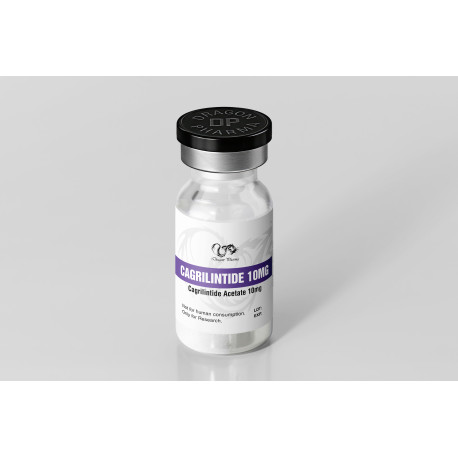
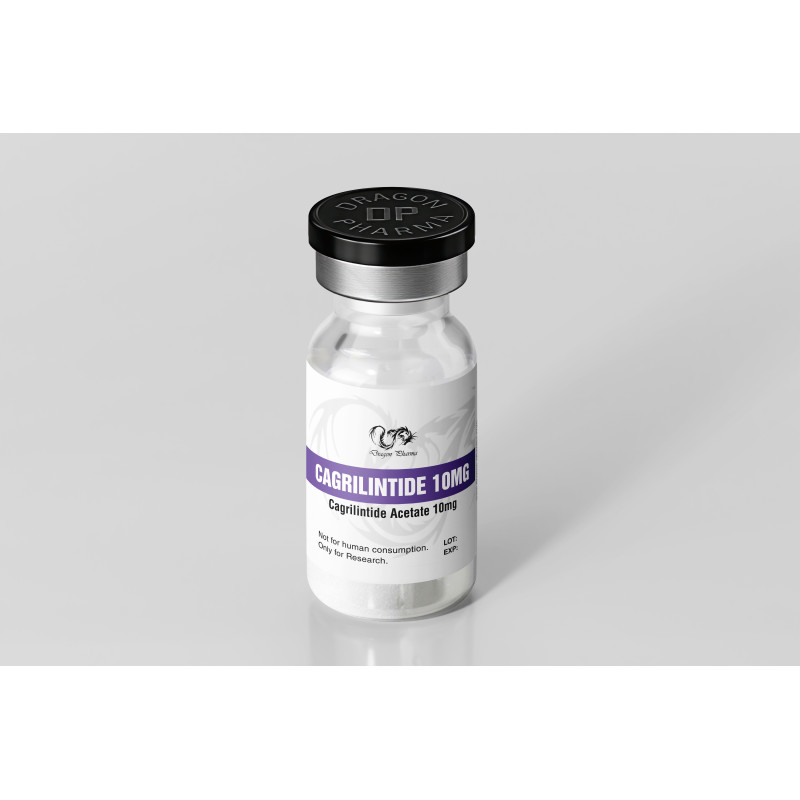
Dragon Pharma Cagrilintide 10mg changes that. Engineered as a long-acting synthetic amylin analog with structural modifications that dramatically extend its stability in the body, Cagrilintide delivers sustained amylin receptor activity through a single weekly subcutaneous injection. For researchers studying appetite suppression, metabolic health, and next-generation obesity peptide protocols, it represents one of the most mechanistically distinct compounds available in the Dragon Pharma peptide line.
Unlike GLP-1 receptor agonists such as semaglutide, which work through incretin signaling pathways, Dragon Pharma Cagrilintide 10mg binds selectively to amylin and calcitonin receptors — predominantly expressed in the hypothalamus, brainstem, and peripheral digestive tissue. This receptor selectivity produces a coordinated multi-system response:
Dragon Pharma Cagrilintide 10mg is administered via subcutaneous injection into the abdomen or thigh, once weekly. Clinical research has explored a dosage range of 0.3 mg to 4.5 mg per week, with the most significant weight-loss outcomes observed at the upper end of this range (2.4–4.5 mg/week) in sustained-use protocols.
A gradual titration approach is critical. Beginning at 0.3–0.6 mg weekly and increasing incrementally over several weeks allows gastrointestinal adaptation to slowed gastric emptying — significantly reducing early-phase nausea and abdominal discomfort that are common at higher starting doses. Researchers should allow a minimum of 2–4 weeks at each dose level before escalating.
Unlike SARM or steroid cycles with defined on/off windows, Cagrilintide is designed for continuous long-term administration. Appetite suppression and weight-loss effects accumulate progressively, with peak outcomes typically observed after several months of consistent dosing in clinical study populations.
The most compelling application of Dragon Pharma Cagrilintide 10mg in current peptide research is its role as a satiety-axis complement to incretin-based compounds. Its amylin/calcitonin receptor mechanism operates independently of GLP-1, GIP, and glucagon pathways — making every major metabolic peptide a potential non-redundant stack partner.
Cagrilintide + Semaglutide (GLP-1 agonist):
The most extensively researched combination in the metabolic peptide space. Semaglutide's GLP-1 receptor activation addresses incretin-driven satiety and insulin secretion; Cagrilintide's amylin pathway adds independent hypothalamic appetite suppression and gastric transit modulation. Trial data consistently shows this combination outperforms semaglutide monotherapy on body weight reduction endpoints.
Cagrilintide + Reta (GLP-1/GIP/Glucagon triple agonist):
Dragon Pharma Reta broad incretin and glucagon receptor coverage combined with Cagrilintide's amylin axis creates a four-pathway metabolic research stack — GLP-1, GIP, glucagon, and amylin receptor activity working in parallel. This represents the most comprehensive appetite and metabolic signaling coverage currently available in peptide research.
Cagrilintide + AOD-9604 (GH Fragment 176–191):
AOD-9604 promotes lipolysis — direct mobilization of stored fat for energy — through GH receptor fragment activity. Cagrilintide contributes the demand-side of the energy equation: reduced caloric intake and sustained satiety. Together they address both fat mobilization and intake suppression within a single research protocol.
Key combination consideration: When combining Cagrilintide with any insulin-stimulating compound, close monitoring for hypoglycemia is essential. Titrate each compound independently before combining to isolate side effect profiles during the adaptation phase.
Dragon Pharma Cagrilintide 10mg is suited for research programs investigating:
It is not appropriate for researchers seeking acute appetite suppression (stimulant mechanisms), anabolic or androgenic effects, or short-cycle metabolic interventions — Cagrilintide's research value is in sustained, hormonal satiety modulation over extended timeframes.
Dragon Pharma Cagrilintide 10mg's side effect profile is consistent with its amylin analog classification — predominantly gastrointestinal, dose-dependent, and most pronounced during the initial titration phase.
Long-term safety data continues to emerge from ongoing Phase III trials. All research use of Dragon Pharma Cagrilintide 10mg should be conducted under appropriate oversight and monitoring protocols.
Dragon Pharma's global reputation in pharmaceutical-grade compound manufacturing is built on three non-negotiables: accurate concentration, structural integrity, and independently verified purity. Dragon Pharma Cagrilintide 10mg upholds these standards with:
GLP-1 receptor agonists like semaglutide work through incretin pathways — stimulating insulin secretion, slowing gastric emptying via GLP-1 receptors, and reducing glucagon. Dragon Pharma Cagrilintide 10mg acts on entirely separate amylin and calcitonin receptors in the hypothalamus, suppressing hunger through a neurological satiety pathway that GLP-1 compounds do not activate. This is why combining the two produces additive rather than redundant results in weight-loss research.
Cagrilintide's mechanism of slowing gastric emptying can produce significant nausea and abdominal discomfort when introduced at full research doses immediately. Starting at 0.3–0.6 mg weekly and escalating gradually allows gastrointestinal adaptation, dramatically reducing side effect intensity without compromising the compound's ultimate research efficacy at target doses.
Both are amylin analogs, but pramlintide requires multiple daily injections timed around meals due to its short half-life. Dragon Pharma Cagrilintide 10mg's engineered structural stability enables once-weekly subcutaneous dosing with consistent receptor activity maintained throughout the week — a substantial advantage for sustained metabolic research protocols requiring stable amylin pathway activation.
Yes. While Cagrilintide's primary clinical development targets obesity treatment, its mechanisms — glycemic stabilization, gastric emptying modulation, and hypothalamic appetite signaling — are relevant to broader metabolic research including post-prandial glucose studies, insulin sensitivity research, and multi-peptide satiety axis investigations independent of obesity as the primary endpoint.
Appetite suppression effects typically emerge within the first 1–2 weeks of consistent dosing. However, meaningful body weight and metabolic outcomes in clinical research populations are generally observed after 12+ weeks of sustained administration — consistent with Cagrilintide's design as a long-term hormonal satiety modulator rather than an acute appetite suppressant.
Dragon Pharma Cagrilintide 10mg is a pharmaceutical-grade research peptide replicating the amylin analog structure of cagrilintide as documented in published clinical and pharmacological literature. It is manufactured under Dragon Pharma's rigorous quality standards for research purposes and is not affiliated with, produced by, or approved by Novo Nordisk.