No results
Reduced price! TB 500 / BPC 157 10mg +

TB 500 / BPC 157 10mg

$75

$45

NEW

Manufacturer: Dragon Pharma
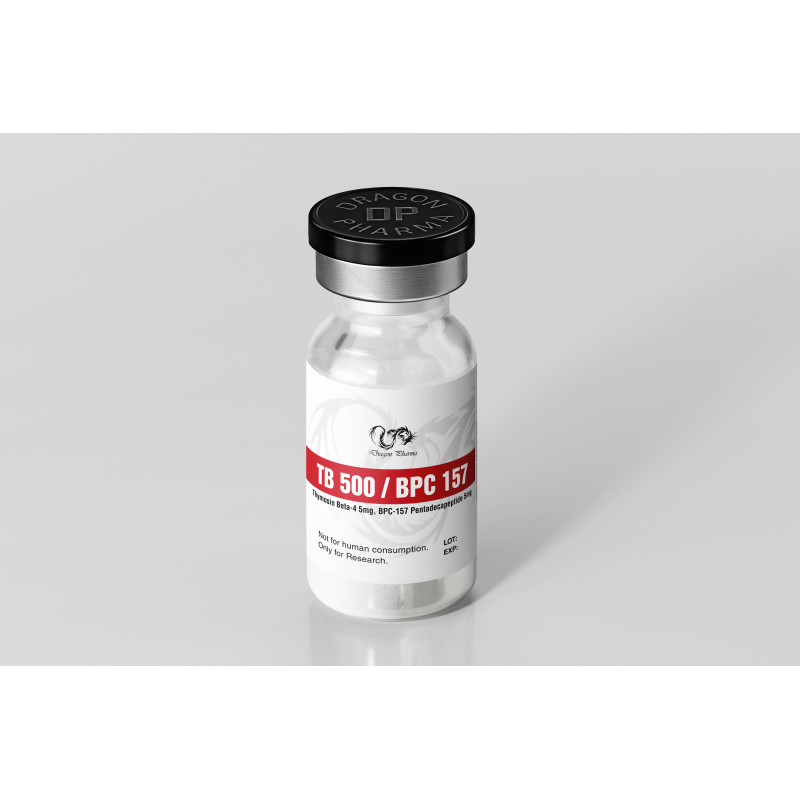
Substance: Pentadecapeptide BPC 157 5mg , Thymosin beta 4 5mg
Package:  2ml vial (powder form)

Description

Dragon Pharma BPC-157 & TB-500 Blend

Dragon Pharma BPC-157 & TB-500 Blend combines two extensively researched synthetic peptides into a single pharmaceutical-grade lyophilized formulation, providing 5 mg of BPC-157 and 5 mg of TB-500 per vial. This research peptide blend is manufactured to rigorous laboratory standards for scientific investigation into tissue regeneration, angiogenesis, cellular migration, connective tissue biology, and regenerative mechanisms.

BPC-157 (Body Protection Compound-157) is a synthetic pentadecapeptide consisting of 15 amino acids originally derived from a protective protein identified in gastric juice. It has attracted considerable scientific interest due to its stability under acidic conditions and its involvement in experimental models investigating nitric oxide signaling, vascular biology, angiogenesis, growth factor regulation, and tissue repair.

TB-500 is a synthetic analogue of the active region of Thymosin Beta-4 (Tβ4), a naturally occurring peptide present in nearly all mammalian cells. It is widely investigated for its ability to regulate actin dynamics, cellular migration, cytoskeletal organization, angiogenesis, extracellular matrix remodeling, and tissue regeneration.

Because these peptides influence different but complementary biological pathways, researchers frequently investigate the BPC-157 and TB-500 combination to better understand coordinated mechanisms involved in wound healing, connective tissue remodeling, vascular regeneration, and cellular recovery.

Every batch of Dragon Pharma BPC-157 & TB-500 Blend is manufactured under strict quality control procedures to ensure exceptional purity, consistency, and molecular integrity. The peptides are supplied as a lyophilized (freeze-dried) powder without unnecessary fillers, preserving stability during storage while providing dependable performance for laboratory research.

Peptide Specifications

PropertyBPC-157TB-500
ProductDragon Pharma BPC-157Dragon Pharma TB-500
Peptide TypeSynthetic PentadecapeptideSynthetic Thymosin Beta-4 Fragment
Peptide SequenceGly-Glu-Pro-Pro-Pro-Gly-Lys-Pro-Ala-Asp-Asp-Ala-Gly-Leu-ValAc-Leu-Lys-Lys-Thr-Glu-Thr-Gln (Ac-LKKTETQ)
Molecular FormulaC62H98N16O22C38H68N12O14
Molecular Weight1419.5 g/mol889.0 g/mol
CAS Number137525-51-0885340-08-9
PubChem CID994195762707662
SynonymsBody Protection Compound-157, Bepecin, PL-14736Thymosin Beta-4 Fragment 17-23, TB-500 Acetate, Ac-LKKTETQ
FormLyophilized Peptide PowderLyophilized Peptide Powder
PurityLaboratory TestedLaboratory Tested
Research ClassificationResearch Use OnlyResearch Use Only

Molecular Structure and Biological Activity

The Dragon Pharma BPC-157 & TB-500 Blend combines two peptides that regulate different aspects of tissue biology through distinct molecular mechanisms.

BPC-157 has been investigated for its influence on nitric oxide (NO) pathways, vascular endothelial growth factor (VEGF), fibroblast activity, collagen synthesis, angiogenesis, and tissue remodeling. Experimental studies suggest that it participates in signaling pathways associated with vascular integrity, cellular communication, connective tissue maintenance, and wound healing.

TB-500 primarily functions through actin-binding mechanisms that regulate cytoskeletal organization, cellular migration, endothelial cell movement, and extracellular matrix remodeling. These biological activities have made TB-500 an important research tool for investigating regenerative biology, tissue organization, and angiogenesis.

Together, these complementary mechanisms provide researchers with a valuable model for studying multiple phases of tissue repair and cellular regeneration.

Mechanism of Action

Rather than sharing identical biological functions, BPC-157 and TB-500 appear to influence separate but interconnected signaling pathways involved in regeneration and tissue homeostasis.

Current laboratory investigations have explored their interaction with:

  • Growth factor signaling
  • Vascular Endothelial Growth Factor (VEGF)
  • Nitric oxide (NO) pathways
  • Endothelial cell migration
  • Angiogenesis
  • Actin polymerization
  • Cytoskeletal organization
  • Fibroblast activation
  • Collagen synthesis
  • Extracellular matrix remodeling
  • Cellular migration
  • Cellular proliferation
  • Protein synthesis
  • Connective tissue remodeling
  • Anti-inflammatory signaling
  • Microvascular development
  • Tissue regeneration
  • Cellular recovery mechanisms

These pathways are central to studies involving regenerative medicine, connective tissue biology, vascular physiology, and wound repair.

Areas of Scientific Research

Tissue Regeneration and Wound Healing

The BPC-157 & TB-500 Blend has attracted significant interest in regenerative biology because both peptides participate in complementary mechanisms associated with tissue repair.

Laboratory studies have investigated:

  • Tissue regeneration
  • Wound healing
  • Cellular recovery
  • Connective tissue repair
  • Fibroblast activation
  • Soft tissue remodeling
  • Surgical wound models
  • Experimental injury models

Researchers continue evaluating how these complementary mechanisms influence multiple stages of tissue regeneration.

Angiogenesis and Vascular Biology

Both peptides have demonstrated involvement in experimental models investigating vascular development and angiogenesis.

Published research has examined:

  • Blood vessel formation
  • Endothelial cell migration
  • Microvascular growth
  • Vascular remodeling
  • Vascular integrity
  • VEGF signaling
  • Endothelial function
  • Capillary development

The combination may provide valuable insights into coordinated vascular repair processes and endothelial biology.

Connective Tissue Research

Experimental investigations have explored the influence of both peptides on connective tissue physiology and extracellular matrix organization.

Research includes:

  • Collagen synthesis
  • Tendon biology
  • Ligament research
  • Muscle tissue regeneration
  • Connective tissue remodeling
  • Extracellular matrix maintenance
  • Cellular adhesion
  • Tissue organization

These biological processes remain important areas of regenerative medicine research.

Cellular Migration and Cytoskeletal Research

TB-500 is widely recognized for its influence on actin dynamics and cytoskeletal organization, while BPC-157 contributes to tissue remodeling through growth factor-mediated signaling.

Current laboratory studies investigate:

  • Cell migration
  • Cytoskeletal remodeling
  • Actin polymerization
  • Cell proliferation
  • Cellular differentiation
  • Tissue architecture
  • Cellular communication
  • Regenerative signaling

These mechanisms provide insight into coordinated tissue repair and structural remodeling.

Inflammation and Recovery Research

Preclinical investigations have explored the anti-inflammatory mechanisms of both peptides during tissue repair.

Research has examined:

  • Inflammatory regulation
  • Cytokine signaling
  • Oxidative stress
  • Cellular protection
  • Tissue homeostasis
  • Recovery biology
  • Microenvironment remodeling
  • Regenerative physiology

The complementary biological activities of both peptides continue to support laboratory investigations into regenerative processes.

Lyophilized Peptide Technology

Dragon Pharma BPC-157 & TB-500 Blend is manufactured as a lyophilized peptide formulation using advanced freeze-drying technology designed to maximize molecular stability and preserve peptide integrity.

Advantages of lyophilization include:

  • Improved molecular stability
  • Extended shelf life
  • Enhanced storage characteristics
  • Preservation of peptide purity
  • Reliable laboratory reconstitution
  • Reduced molecular degradation

No unnecessary fillers are incorporated during manufacturing.

Storage and Handling

For optimal stability, store the lyophilized peptide blend in a cool, dry environment protected from moisture, heat, and direct sunlight.

Following laboratory reconstitution, peptide solutions are commonly stored under refrigeration according to established laboratory protocols. Proper storage and handling help preserve peptide stability and molecular integrity throughout research applications.

Quality Assurance

Dragon Pharma follows rigorous manufacturing and quality assurance standards to deliver dependable research compounds.

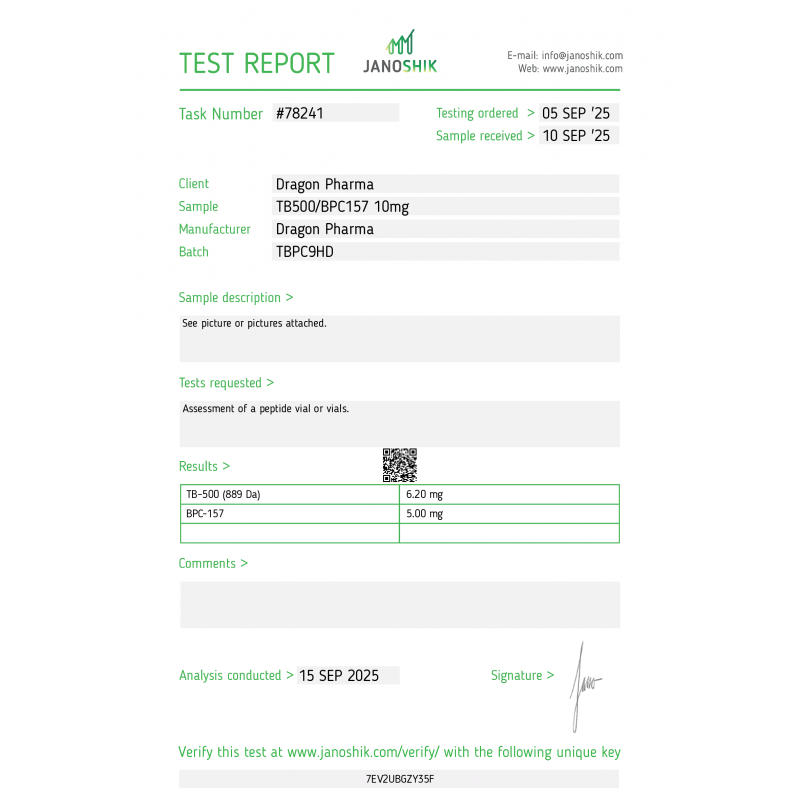
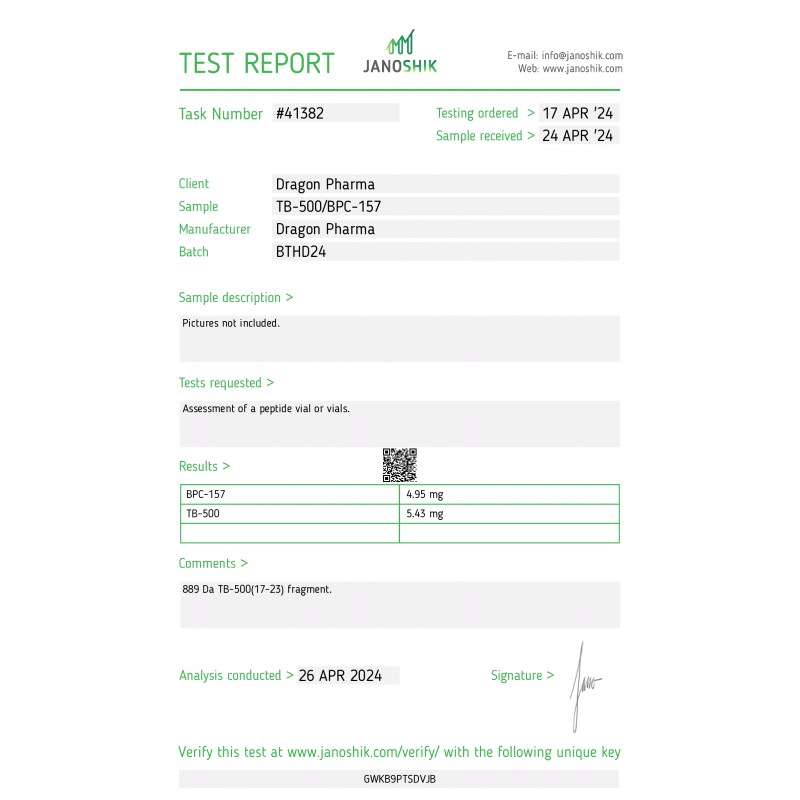
Every production batch undergoes comprehensive laboratory evaluation, including:

  • Identity verification
  • Purity assessment
  • Molecular weight confirmation
  • Batch consistency analysis
  • Quality control testing
  • Contaminant screening

Analytical methods such as High-Performance Liquid Chromatography (HPLC) and Liquid Chromatography-Mass Spectrometry (LC-MS) are recognized industry standards for confirming peptide identity, purity, and molecular integrity.

Why Choose Dragon Pharma BPC-157 & TB-500 Blend?

Researchers choose Dragon Pharma because of its commitment to pharmaceutical-quality manufacturing and dependable research compounds.

Key advantages include:

  • Pharmaceutical-grade manufacturing
  • Premium dual-peptide formulation
  • High-purity lyophilized peptides
  • No unnecessary fillers
  • Batch-tested quality
  • Stable molecular composition
  • Advanced laboratory quality control
  • Excellent peptide integrity
  • Trusted Dragon Pharma manufacturing standards

Research Use Disclaimer

Dragon Pharma BPC-157 & TB-500 Blend is supplied exclusively for laboratory research and scientific investigation. This peptide blend is intended for qualified researchers and must only be used in accordance with applicable research regulations. It is not approved for human consumption, medical treatment, diagnosis, or therapeutic use.

Scientific References

The information presented on this page is based on peer-reviewed scientific literature investigating BPC-157, TB-500 (Thymosin Beta-4 fragment), and their biological mechanisms in laboratory and preclinical research. Published studies have explored tissue regeneration, angiogenesis, endothelial biology, connective tissue remodeling, nitric oxide signaling, cytoskeletal organization, wound healing, and regenerative physiology. Dragon Pharma supplies this peptide blend exclusively for laboratory research purposes. This compound is not intended for human consumption, diagnosis, or therapeutic use.

  1. Su L, Kong X, Loo S, et al. Thymosin Beta-4 Improves Endothelial Function and Reparative Potency of Diabetic Endothelial Cells Differentiated from Patient-Induced Pluripotent Stem Cells. Stem Cell Research & Therapy. 2022;13:13.
    DOI: https://doi.org/10.1186/s13287-021-02687-x
  2. Seiwerth S, Milavic M, Vukojevic J, et al. Stable Gastric Pentadecapeptide BPC 157 and Wound Healing. Frontiers in Pharmacology. 2021;12:627533.
    DOI: https://doi.org/10.3389/fphar.2021.627533

Details

  • Route of administration
    Injection

Reviews

Grade 
12/24/2024

Awesome product!

Been taking for 2 weeks for a knee injury, already feeling better. Thanks Dragon!

  • 12 out of 12 people found this review useful.

Write your review!

Write a review

TB 500 / BPC 157 10mg

TB 500 / BPC 157 10mg

NEW

Manufacturer: Dragon Pharma
Substance: Pentadecapeptide BPC 157 5mg , Thymosin beta 4 5mg
Package:  2ml vial (powder form)