August 18, 2026 · 8 min read
The Complete Guide to KLOW Peptide Benefits
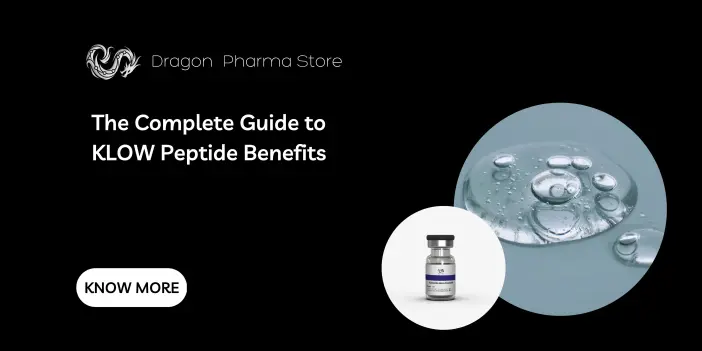
Peptide therapy has become increasingly visible in conversations about recovery, skin health, regenerative medicine, athletic performance, and healthy aging. Among the combinations discussed online is the KLOW peptide, generally described as a blend of four biologically active peptides: GHK-Cu, KPV, BPC-157, and TB-500. For readers searching for klow peptide, it is important to recognize that evidence for many peptide combinations and their claimed benefits remains limited, and potential risks, product quality, and regulatory considerations should be discussed with a qualified healthcare professional.
Each ingredient has attracted scientific interest for different reasons. GHK-Cu has been studied in skin and tissue biology, KPV has been investigated for anti-inflammatory signaling, BPC-157 has generated extensive preclinical research involving tissue repair, and thymosin beta-4 research has examined cellular migration and wound healing.
But an important distinction is often lost in online discussions: evidence for an individual peptide does not establish that a four-peptide combination is effective in humans. A plausible biological mechanism is also not the same as clinically proven treatment.
This article examines the KLOW peptide ingredients, proposed applications, current evidence, safety considerations, regulatory questions, and the difference between scientific findings and marketing claims.
What Is the KLOW Peptide Blend?
KLOW is best understood as a peptide blend or peptide stack rather than a single pharmaceutical compound. The four ingredients commonly associated with KLOW are:
|
Peptide |
Main research interest |
|
GHK-Cu |
Skin biology, collagen, tissue remodeling |
|
KPV |
Inflammation and cellular signaling |
|
BPC-157 |
Tissue repair and gastrointestinal biology |
|
TB-500 |
Tissue repair and cellular migration |
Understanding the Four KLOW Peptides
GHK-Cu
GHK-Cu is a copper-binding form of the naturally occurring tripeptide glycyl-L-histidyl-L-lysine.
Researchers have investigated GHK-Cu because it participates in biological processes involving fibroblasts, extracellular-matrix components, collagen, and tissue remodeling. Reviews describe effects on cellular signaling and wound-repair pathways, while experimental studies have investigated its effects on collagen deposition, angiogenesis, and tissue regeneration.
Human evidence is more limited than the large body of laboratory and animal research. Some older topical studies have examined copper tripeptide preparations in skin applications, but these findings should not be interpreted as evidence that injectable GHK-Cu or a KLOW blend has established anti-aging effects.
KPV Peptide
KPV is a short peptide corresponding to the C-terminal portion of alpha-melanocyte-stimulating hormone (α-MSH). Researchers have investigated KPV because α-MSH-related signaling is involved in inflammation and immune regulation. Laboratory work has demonstrated biological activity in human keratinocyte models, providing a rationale for further investigation.
However, laboratory activity is not equivalent to demonstrating therapeutic effectiveness in patients. The FDA has specifically noted that it has not identified human exposure data for KPV in drug products and lacks important information needed to determine potential safety concerns.
BPC-157
BPC-157 is a synthetic peptide that has become particularly popular in discussions about recovery and tissue repair. Animal and laboratory research has investigated BPC-157 in areas including wound healing, gastrointestinal injury, inflammation, and musculoskeletal tissue. However, the translation from these models to human medicine remains a major limitation.
A recent review of BPC-157 development concluded that the compound remains investigational, with limited human data and no complete Phase II clinical trial establishing its therapeutic effectiveness.
TB-500 and Thymosin Beta-4
Thymosin beta-4 is a naturally occurring peptide involved in cellular processes including actin regulation and cell migration. Researchers have investigated it in wound healing and tissue repair.
Human research does exist for certain forms and applications of thymosin beta-4. For example, a randomized Phase 2 study examined topical thymosin beta-4 in patients with venous ulcers and reported acceptable tolerability in the study population, with findings suggesting potential effects on wound healing.
However, those findings should not automatically be transferred to commercially marketed TB-500 products. The specific molecular form, formulation, route, and clinical context matter.
How Might KLOW Peptides Work?
The four components are proposed to influence different biological processes. At a high level, the areas of interest include:
- Cellular signaling
- Inflammatory pathways
- Fibroblast activity
- Collagen and extracellular-matrix remodeling
- Cellular migration
- Angiogenesis, or new blood-vessel formation
- Wound-healing processes
- Oxidative and cellular stress
Think of tissue repair as a coordinated construction project. Inflammation helps initiate the response, cells migrate toward damaged areas, new tissue is produced, blood supply changes, and the extracellular matrix is remodeled.
Peptides can influence some of these biological signals in experimental settings. But demonstrating that a peptide changes a cellular pathway does not establish that administering a peptide to a person will produce a meaningful clinical outcome. That distinction is central to understanding peptide therapy.
KLOW Peptide Benefits: What Does the Evidence Actually Show?
Tissue and Injury Recovery
Recovery is one of the most common reasons people search for KLOW for recovery. BPC-157 and thymosin beta-4-related research provides biological reasons for interest in tissue repair. Animal studies have reported effects involving vascular responses, cellular migration, and tissue remodeling.
However, human evidence remains insufficient to conclude that KLOW reliably accelerates recovery from sports injuries, tendon problems, ligament injuries, or muscle damage.
Inflammation
KPV has attracted attention because of its relationship to α-MSH-related inflammatory signaling. Laboratory research supports biological activity, but there is currently insufficient human evidence to establish KPV as a general anti-inflammatory treatment.
Muscle and Joint Recovery
Athletes and active adults are particularly interested in peptides for tissue repair because injuries can interrupt training. The biological rationale is interesting, but there is a major difference between demonstrating improved tissue markers in an animal model and demonstrating faster return to sport in a controlled human trial.
KLOW should therefore not be presented as a proven method for reducing injury downtime or enhancing athletic performance.
Skin Health and Collagen
This is one area where GHK-Cu has a relatively substantial research history. Experimental work indicates that GHK-Cu can influence fibroblast behavior and extracellular-matrix processes, including collagen-related pathways.
Some human research has examined topical copper tripeptide products, although results have not uniformly demonstrated major improvements in objective skin outcomes. Therefore, peptides for skin health remain an interesting research area, but evidence for systemic KLOW therapy as an anti-aging intervention is not established.
Gut Health
BPC-157 and KPV have generated interest in gastrointestinal research, particularly because of experimental findings involving inflammation and tissue integrity. But this does not mean KLOW is an established treatment for inflammatory bowel disease, irritable bowel syndrome, intestinal permeability, or other gastrointestinal disorders.
People with persistent digestive symptoms should receive an appropriate medical evaluation rather than substituting experimental peptide therapy for diagnosis and evidence-based treatment.
Cellular Health and Longevity
Inflammation, tissue damage, oxidative stress, and declining regenerative capacity are all relevant to aging biology. That makes peptides involved in cellular signaling scientifically interesting. It does not, however, demonstrate that KLOW extends human lifespan or reverses biological aging. Supporting a cellular pathway is not the same as proving longevity.
KLOW for Anti-Aging
Searches for KLOW for anti-aging are largely driven by interest in GHK-Cu, tissue remodeling, inflammation, and recovery. GHK-Cu research provides a reasonable scientific basis for investigating skin and connective-tissue biology.
There is currently insufficient evidence to say that KLOW:
- Reverses biological aging
- Extends human lifespan
- Prevents age-related disease
- Restores youthful physiology throughout the body
A more scientifically defensible description is that some KLOW ingredients are being investigated for biological processes relevant to skin repair and tissue remodeling.
KLOW Peptide vs. Individual Peptides
Using a combination does not automatically create synergistic treatment.
|
Option |
Main research focus |
|
GHK-Cu |
Skin and tissue remodeling |
|
KPV |
Inflammatory signaling |
|
BPC-157 |
Tissue and gastrointestinal repair |
|
TB-500 |
Tissue-repair-related biology |
|
KLOW blend |
Multiple biological pathways |
KLOW Peptide and Athletic Recovery
Interest in peptide recovery is particularly high among athletes, runners, weightlifters, and other physically active people. The appeal is understandable: if a compound could safely improve tissue repair, it might theoretically help an athlete return to activity more efficiently.
But experimental peptide use should not replace:
- Medical diagnosis
- Physical therapy
- Appropriate rehabilitation
- Progressive strength training
- Adequate nutrition
- Sleep and recovery
- Evidence-based treatment for injury
A promising laboratory result is a reason for further research not a reason to assume an experimental peptide is a replacement for established rehabilitation.
Conclusion
The KLOW peptide concept combines four biologically active compounds GHK-Cu, KPV, BPC-157, and TB-500 that have attracted scientific and commercial interest in areas ranging from tissue repair and inflammation to health and healthy aging. Readers searching for Dragon Pharma Buy should evaluate such products carefully, as evidence for the KLOW combination remains limited and does not establish it as a proven treatment or performance-enhancing therapy.
There are legitimate reasons to study these molecules. GHK-Cu has a substantial research history in tissue remodeling, BPC-157 has produced intriguing preclinical findings, KPV has demonstrated biological activity in experimental models, and thymosin beta-4 has been investigated in human wound-healing research.
The most important conclusion is therefore straightforward: evidence for individual peptides should not be mistaken for evidence that the KLOW combination is clinically effective or capable of reversing aging, accelerating athletic recovery, or treating disease. Anyone considering peptide therapy, including products marketed by Dragon Pharma, should discuss the evidence, regulatory status, product quality, potential risks, and established alternatives with a qualified healthcare professional.