 Domestic & International
-40% OFF
Domestic & International
-40% OFF
Dragon Pharma, Europe
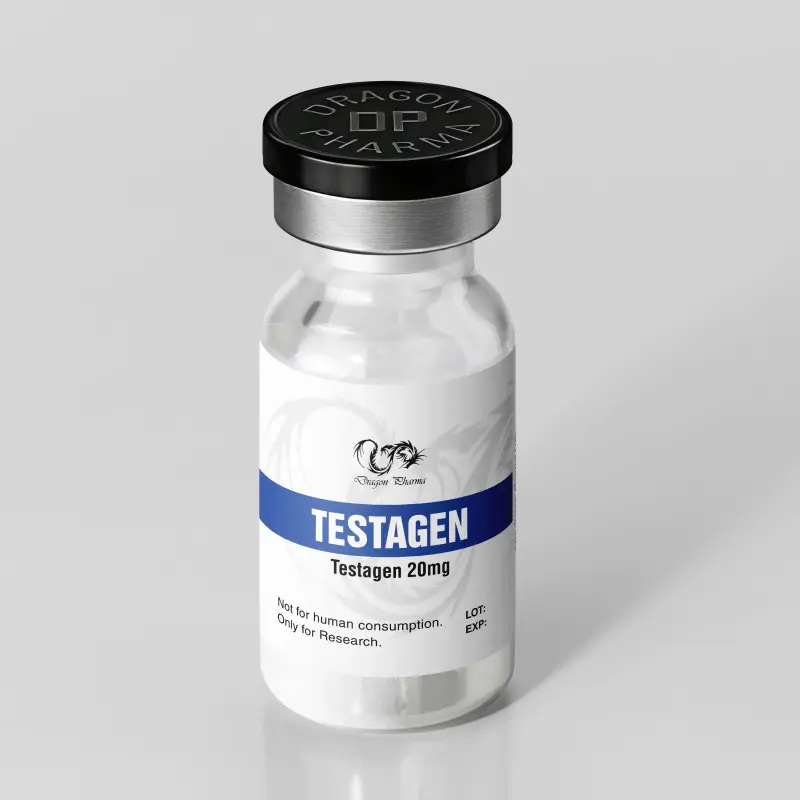
Testagen
Injection · 10mg · vial
$37.80
$63.00
You will save $25.20
Compound ID
Testagen
Strength
20 mg/vial
Form
Lyophilized Powder
Packaging
2 mL Vial
Classification
Bioregulator Peptide
Active Substance
Testagen
Active Half-Life
~24 Hours
Properties
Shipping
Not available in this combination
Product overview
Dragon Pharma Testagen Peptide
Dragon Pharma Testagen is a research-grade synthetic tetrapeptide bioregulator composed of the amino acid sequence Lysine-Glutamic acid-Aspartic acid-Glycine, represented in single-letter code as KEDG. Originally isolated and characterized by Professor Vladimir Khavinson and colleagues at the St. Petersburg Institute of Bioregulation and Gerontology as the active component of anterior pituitary tissue extracts, Dragon Pharma Testagen belongs to the cytogen class of ultrashort peptide bioregulators — endogenous regulatory molecules that act at the nuclear level to modulate tissue-specific gene expression.
Dragon Pharma Testagen's research profile spans three interconnected biological domains: its high-affinity interaction with cellular amino acid and peptide transporters (LAT1, LAT2, PEPT1), its documented activity in hypothalamic-pituitary-thyroid axis regulation in preclinical hypophysectomy models, and its capacity for nuclear membrane penetration and direct DNA interaction — the characteristic mechanism shared by the broader Khavinson short-peptide bioregulator family. A structurally adjacent peptide differing by one C-terminal residue, KEDW, has been characterized binding along the DNA major groove and regulating pancreatic differentiation factor expression, providing a comparative framework for KEDG's nuclear activities.
Dragon Pharma Testagen is supplied as a lyophilized powder verified at ≥99% purity by HPLC with LC-MS molecular identity confirmation. Every batch ships with an independent third-party Certificate of Analysis. For research use only.
Compound Specifications
| Property | Value |
|---|---|
| Product | Dragon Pharma Testagen |
| Common Abbreviation | KEDG |
| Other Known Titles | Anterior Pituitary Peptide (APP), Testagen KEDG |
| Peptide Type | Synthetic tetrapeptide bioregulator |
| Peptide Sequence | H-Lys-Glu-Asp-Gly-OH |
| Molecular Formula | C17H29N5O9 |
| Molecular Weight | 447.2 g/mol |
| CAS Number | 75007-24-8 |
| Peptide Family | Khavinson cytogen series |
| Tissue Origin | Anterior pituitary gland (Khavinson nomenclature) |
| Primary Research Areas | Endocrine regulation, HPT axis, DNA interaction, transporter biology, cellular differentiation |
| Form | Lyophilized powder |
| Purity | ≥99% (HPLC verified) |
| Identity Verification | LC-MS (sequence + mass confirmed) |
| COA | Independent third-party, batch-specific |
| Storage (lyophilized) | -20°C, protected from light; stable 24+ months |
| Storage (reconstituted) | 2–8°C, use within 28 days |
| Reconstitution | Bacteriostatic water, aseptic conditions |
| Research Classification | Research use only |
| Manufacturer | Dragon Pharma |
Dragon Pharma Testagen in the Khavinson Bioregulator Framework
Dragon Pharma Testagen occupies a specific position within the Khavinson cytogen peptide series — the tissue-derived short peptide bioregulators developed over four decades of research at the St. Petersburg Institute of Bioregulation and Gerontology. The cytogen model proposes that each organ and tissue produces characteristic ultrashort peptides that function as endogenous molecular messengers, maintaining tissue-specific gene expression programs throughout the organism's lifespan and declining in production with age.
Testagen (KEDG) is the anterior pituitary-derived bioregulator within this system. Its designation reflects its tissue origin: the anterior pituitary gland — the master endocrine regulator controlling thyroid, adrenal, gonadal, and growth hormone axes through trophic hormone secretion. As a hypophyseal-derived regulatory molecule, Dragon Pharma Testagen is characterized in laboratory research for its ability to influence pituitary-axis-dependent endocrine functions, particularly thyroid regulation and reproductive hormone signaling, through direct nuclear gene regulatory mechanisms rather than classical receptor-ligand signaling pathways.
Dragon Pharma supplies Testagen alongside other cytogen-series compounds including Livagen (KEDA, liver-derived), Ovagen (EDL, liver and GI-derived), Epitalon (AEDG, pineal-derived), and Vilon (KE, immune-derived), allowing researchers to build comparative multi-tissue bioregulator protocols from a single consistent quality-controlled source.
Testagen vs Related Khavinson Tetrapeptides
| Peptide | Sequence | Tissue Origin | Primary Research Focus |
|---|---|---|---|
| Testagen (KEDG) | Lys-Glu-Asp-Gly | Anterior pituitary | HPT axis, thyroid morphology, endocrine regulation |
| Livagen (KEDA) | Lys-Glu-Asp-Ala | Liver | Hepatoprotection, chromatin remodeling, epigenetics |
| Epitalon (AEDG) | Ala-Glu-Asp-Gly | Pineal gland | Telomere biology, melatonin regulation, longevity |
| Ovagen (EDL) | Glu-Asp-Leu | Liver / GI epithelium | Hepatic and gastrointestinal tissue biology |
| Cartalax (AED) | Ala-Glu-Asp | Cartilage | Senescence, SIRT6, collagen signaling |
| KEDW (adjacent) | Lys-Glu-Asp-Trp | Pancreas (proposed) | DNA major groove binding, pancreatic differentiation factors |
The structural proximity of Dragon Pharma Testagen (KEDG) to these family members — sharing three of four residues with Livagen and differing by only one C-terminal residue from KEDW — is relevant for comparative peptide research. Each peptide within the KED- sequence family carries distinct C-terminal residues that influence DNA binding specificity, transporter affinity, and target tissue selectivity. Dragon Pharma's availability of multiple cytogen-series compounds enables systematic comparative research across this sequence family from a consistent quality-controlled manufacturing source.
Mechanism of Action
Transporter-Mediated Cellular Uptake
A 2023 molecular modeling study by Khavinson, Linkova, Rudskoy, and Petukhov published in Biomolecules examined the feasibility of LAT and PEPT family transporter-mediated uptake of 26 biologically active ultrashort peptides, including Dragon Pharma Testagen's KEDG sequence. The analysis identified high binding affinity at LAT1, LAT2, and PEPT1 transporter proteins — the cellular uptake systems responsible for amino acid and small peptide import across cell membranes.
KEDG's charge distribution — negatively charged residues (glutamic acid, aspartic acid) at positions 2 and 3, flanked by the positively charged lysine at position 1 and the neutral glycine at position 4 — produced one of the most favorable transporter binding profiles among the 26 ultrashort peptides modeled. This transporter binding specificity has dual research significance: it characterizes the cellular uptake mechanism that delivers KEDG to nuclear interaction sites, and it identifies KEDG as a candidate inhibitor of LAT family transporters that are frequently overexpressed in cancer cell models — opening a secondary research axis beyond classical endocrine biology.
Nuclear Penetration and DNA Interaction
Fedoreyeva, Kireev, Khavinson, and Vanyushin (2011) demonstrated in HeLa cell models that short fluorescence-labeled peptides from the Khavinson series penetrate cell nuclei and interact specifically with DNA structures in vitro. KEDG's charge distribution and molecular geometry support nuclear localization and subsequent DNA binding, consistent with the broader cytogen bioregulator model in which tissue-specific short peptides reach chromatin and modulate gene expression at the transcriptional level.
The structural analogue KEDW (differing by Trp at the C-terminus instead of Gly) provides the most precise published characterization of this binding mechanism available for the KED sequence family. Physical studies using UV-visible absorption spectroscopy and circular dichroism confirmed that KEDW forms stable complexes with DNA, binding along the major groove — the primary site of sequence-specific transcription factor interaction. KEDW was further shown to regulate expression of pancreatic differentiation factors PDX1, NGN3, PAX6, and FOXA2 in pancreatic cell models (Khavinson et al., 2015). The one-residue structural difference between KEDG and KEDW makes this characterization highly relevant to understanding Dragon Pharma Testagen's DNA interaction capacity, while establishing that C-terminal residue variation produces meaningful differences in downstream gene regulatory specificity.
Hypothalamic-Pituitary-Thyroid Axis Regulation
As a hypophyseal-derived regulatory molecule, Dragon Pharma Testagen (KEDG) has been characterized in the context of the hypothalamic-pituitary-thyroid (HPT) axis. Kuznik, Pateyuk, and Rusaeva (2008) demonstrated in neonatally hypophysectomized chickens that KEDG treatment preserved thyroid gland structural integrity — counteracting the enlarged follicles, colloid accumulation, and altered thyrocyte architecture that develop after pituitary removal. KEDG functions through direct tissue-specific interaction with thyroid tissue rather than classical HPT feedback restoration, suggesting it acts as an endogenous molecular signal that maintains thyroid structural programs independently of pituitary trophic hormones.
Immunomodulatory Activity
In the same neonatally hypophysectomized avian models, KEDG treatment normalized immune parameters that become dysregulated following hypophyseal removal. The immunoregulatory effects were more pronounced in neonatal subjects than in mature animals (one-year-old birds), suggesting age-dependent responsiveness to KEDG's regulatory signal. This immune restoration mechanism involves direct interaction with immune system components rather than indirect hormonal modulation — consistent with the direct nuclear interaction model rather than receptor-mediated endocrine signaling.
Cellular Differentiation Research
Caputi et al. (2019) investigated the effects of short peptides on neuronal differentiation of stem cells, finding that the closely related KED sequence increases Nestin expression — a neurofilament protein expressed in early neuronal precursors — in human periodontal ligament stem cells. This differentiation-promoting activity suggests KEDG may influence epigenetic mechanisms that direct stem cell fate decisions toward neuronal lineages, positioning it as a research tool for investigating peptide-mediated regulation of neural differentiation programs.
Research Applications
HPT Axis and Thyroid Biology Research
Dragon Pharma Testagen is the primary research tool for studying KEDG's role in hypothalamic-pituitary-thyroid axis biology. Research applications include: thyroid gland morphology preservation in hypophysectomy models, follicular organization and thyrocyte architecture studies, thyroid hormone regulation in the context of pituitary dysfunction, and investigation of pituitary-independent thyroid maintenance mechanisms. The avian hypophysectomy model system provides a well-characterized preclinical platform for these investigations.
Transporter Biology and Cancer Cell Research
Dragon Pharma Testagen's characterized affinity for LAT1, LAT2, and PEPT1 transporters positions it as a research tool for two connected investigation areas: the basic biochemistry of ultrashort peptide cellular uptake mechanisms, and the pharmacological modulation of LAT family transporters that are overexpressed in multiple cancer cell types. LAT1 in particular is a validated cancer research target due to its role in supplying amino acids for tumor cell proliferation, making KEDG's transporter binding profile of interest beyond classical endocrine research contexts.
DNA Interaction and Gene Expression Studies
Dragon Pharma Testagen serves as a research compound for investigating short peptide-DNA interaction mechanisms within the Khavinson bioregulator framework. Research applications include nuclear localization studies, peptide-DNA complex formation characterization, comparative DNA binding analysis within the KEDG/KEDA/AEDG/KEDW sequence family, and investigation of how one-residue C-terminal variation affects gene expression specificity. The KEDW major groove binding characterization provides a structural reference framework for Dragon Pharma Testagen's mechanistic investigation.
Endocrine Aging and Age-Dependent Response Research
The documented age-dependent efficacy pattern of KEDG — more pronounced corrective effects in neonatal versus mature hypophysectomized subjects — provides a research platform for investigating how developmental stage affects responsiveness to endogenous peptide bioregulator signals. Dragon Pharma Testagen is relevant for comparative aging models examining how pituitary-axis regulatory capacity changes across the lifespan and how endogenous short peptides might compensate for age-related hormonal decline.
Immune System and Neuroendocrine Research
Dragon Pharma Testagen's immunonormalizing activity in hypophysectomized models provides a research platform for studying pituitary-immune system communication and the molecular mechanisms by which endogenous pituitary peptides maintain immune homeostasis. This connects to the broader neuroendocrine-immune research axis, examining bidirectional communication between the endocrine and immune systems at the peptide signaling level.
Stem Cell Differentiation Research
The neuronal differentiation-promoting activity of the closely related KED sequence in periodontal ligament stem cell models positions Dragon Pharma Testagen as a relevant research compound for investigations into peptide-mediated epigenetic control of stem cell fate decisions, particularly along neural lineage pathways. This application extends Dragon Pharma Testagen's research utility beyond classical endocrine biology into regenerative biology and tissue engineering research contexts.
Dragon Pharma Quality Assurance
Dragon Pharma Testagen is manufactured to research-grade specifications with independent laboratory verification before release. The KEDG tetrapeptide sequence at 447.2 g/mol is shorter than many of the compounds in Dragon Pharma's catalog, which places greater emphasis on sequence precision — at four residues, a single amino acid substitution produces a completely different peptide with distinct biological activity. Comparison to structurally similar sequences (KEDA/Livagen, AEDG/Epitalon, KEDW) requires confirmed KEDG identity.
- HPLC purity — ≥99% confirmed per batch
- LC-MS identity — confirms Lys-Glu-Asp-Gly sequence and 447.2 g/mol molecular weight; distinguishes KEDG from structurally similar Khavinson peptides sharing the KED core
- Sterility and endotoxin screening — per batch
- Residual solvent screening
- Independent third-party COA per batch — lot-traceable; not reused across production runs
Dragon Pharma's batch verification system — the same infrastructure applied across the full cytogen peptide catalog including Livagen, Ovagen, Epitalon, and Cartalax — ensures that Dragon Pharma Testagen delivers confirmed sequence identity alongside purity documentation, providing researchers with full chemical traceability for every vial.
Storage and Handling
Lyophilized powder: Store at -20°C, protected from light and moisture. Stable for 24 months or longer. Allow vial to equilibrate to room temperature before opening to prevent condensation from entering. Dragon Pharma Testagen ships in lyophilized form without cold-chain dependency.
Reconstituted solution: Store at 2–8°C. Use within 28 days. Avoid repeated freeze-thaw cycles, which degrade peptide integrity and reduce experimental reproducibility.
Reconstitution: Add bacteriostatic water slowly against the inner vial wall. Swirl gently until dissolved — do not shake or vortex. Maintain aseptic conditions throughout. Dragon Pharma Testagen is water-soluble and dissolves readily at standard laboratory concentrations.
For research use only. Not for human consumption, veterinary use, or therapeutic application.
Key Features
- ✔ Dragon Pharma manufacturing quality — produced under the same pharmaceutical-grade standards applied across Dragon Pharma's full Khavinson cytogen peptide catalog
- ✔ LC-MS sequence identity confirmation — confirms Lys-Glu-Asp-Gly specifically; distinguishes Dragon Pharma Testagen from structurally adjacent KEDA (Livagen) and AEDG (Epitalon) sequences
- ✔ ≥99% HPLC purity — exceeds standard research-grade threshold
- ✔ LAT1/LAT2/PEPT1 transporter affinity characterized — the only ultrashort peptide in Dragon Pharma's catalog with published transporter binding modeling confirming one of the highest affinities among 26 ultrashort peptides analyzed
- ✔ HPT axis research anchor — published preclinical data in hypophysectomized models documents thyroid morphology preservation and immunomodulatory activity
- ✔ KEDW comparative framework — one-residue structural difference from the DNA major groove-binding KEDW provides the most relevant comparative reference for Dragon Pharma Testagen's nuclear interaction research
- ✔ Multi-system research relevance — single compound with documented or inferred activity across transporter biology, HPT axis, DNA interaction, immune regulation, and stem cell differentiation research domains
- ✔ Dragon Pharma cytogen series availability — Testagen available alongside Livagen (KEDA), Ovagen (EDL), Epitalon (AEDG), and Cartalax (AED) for comparative multi-tissue bioregulator research from a consistent source
- ✔ Independent third-party COA per batch — lot-traceable documentation from third-party laboratory
Frequently Asked Questions About Dragon Pharma Testagen
What is Dragon Pharma Testagen?
Dragon Pharma Testagen is a research-grade synthetic tetrapeptide bioregulator (H-Lys-Glu-Asp-Gly-OH / KEDG) belonging to the Khavinson cytogen peptide series and characterized as the anterior pituitary-derived bioregulator within this system. Manufactured by Dragon Pharma to research-grade specifications, it is supplied as lyophilized powder at ≥99% HPLC purity with LC-MS sequence identity confirmation and independent batch-specific COA. For research use only.
What does KEDG stand for?
KEDG is the single-letter amino acid abbreviation for Dragon Pharma Testagen's sequence: K (Lysine), E (Glutamic acid), D (Aspartic acid), G (Glycine). It is used interchangeably with Testagen in scientific literature. The peptide is also referenced as APP (Anterior Pituitary Peptide) in some research contexts.
How does Dragon Pharma Testagen differ from Livagen (KEDA)?
Dragon Pharma Testagen (KEDG) and Livagen (KEDA) share three of four amino acid residues, differing only at the C-terminal position: Gly in Testagen versus Ala in Livagen. Despite this single-residue difference, the two peptides have distinct tissue origins (anterior pituitary vs. liver) and different primary research applications (HPT axis / endocrine regulation vs. hepatoprotection / chromatin remodeling). LC-MS identity verification is essential to confirm which compound is present — a quality step Dragon Pharma performs per batch for both products.
What is the significance of KEDG's LAT1/LAT2/PEPT1 transporter affinity?
Published molecular modeling (Khavinson et al., 2023, Biomolecules) identified Dragon Pharma Testagen's KEDG sequence as having one of the highest transporter binding affinities among 26 ultrashort peptides analyzed for LAT1, LAT2, and PEPT1 uptake. This has dual research relevance: it characterizes the cellular uptake pathway that delivers KEDG to nuclear interaction sites, and it identifies KEDG as a potential inhibitor of LAT family transporters that are overexpressed in cancer cell models — expanding Testagen's research utility beyond classical endocrine applications.
What is the KEDW comparison and why does it matter for Dragon Pharma Testagen research?
KEDW differs from Dragon Pharma Testagen (KEDG) by only one C-terminal residue — Trp (tryptophan) instead of Gly (glycine). Khavinson et al. (2015) characterized KEDW as binding along the DNA major groove and regulating expression of pancreatic differentiation factors PDX1, NGN3, PAX6, and FOXA2. This published characterization provides the most structurally relevant reference framework for understanding how Dragon Pharma Testagen may interact with DNA — while the single residue difference makes it a natural comparative research tool for investigating how C-terminal amino acid identity affects peptide-DNA interaction specificity.
What thyroid research has been conducted with Dragon Pharma Testagen?
Kuznik, Pateyuk, and Rusaeva (2008, Bulletin of Experimental Biology and Medicine) demonstrated in neonatally hypophysectomized chickens that KEDG prevents thyroid gland atrophy and normalizes tissue morphology — counteracting enlarged follicles, colloid accumulation, and altered thyrocyte structure. The peptide functions through direct tissue-specific interaction rather than HPT feedback restoration. Age-dependent response patterns were documented, with more pronounced corrective effects in neonatal versus mature hypophysectomized subjects.
What is the molecular weight of Dragon Pharma Testagen?
Dragon Pharma Testagen (Lys-Glu-Asp-Gly / KEDG) has a molecular weight of 447.2 g/mol and a molecular formula of C17H29N5O9. CAS number is 75007-24-8.
How should Dragon Pharma Testagen be stored?
Lyophilized powder at -20°C, protected from light, stable 24 months or longer. After reconstitution with bacteriostatic water, store at 2–8°C and use within 28 days. Avoid repeated freeze-thaw cycles. Allow vial to equilibrate to room temperature before opening to prevent condensation.
Can Dragon Pharma Testagen be used in comparative Khavinson bioregulator protocols?
Yes. Dragon Pharma manufactures multiple compounds from the Khavinson cytogen series, including Testagen (KEDG), Livagen (KEDA), Ovagen (EDL), Epitalon (AEDG), and Cartalax (AED). These compounds have distinct tissue origins and proposed gene regulatory specificities within the cytogen framework, making them suitable for comparative multi-tissue research protocols from a consistent quality-controlled manufacturing source — a significant practical advantage for laboratories building comprehensive Khavinson bioregulator research programs.
Is Dragon Pharma Testagen intended for human use?
No. Dragon Pharma Testagen is supplied strictly for in vitro laboratory research by qualified investigators. It is intended exclusively for research purposes and is not for human consumption, therapeutic use, or veterinary application. All use must comply with applicable institutional and regulatory requirements.
Scientific References
The information presented on this page draws from published peer-reviewed scientific literature investigating Dragon Pharma Testagen (Lys-Glu-Asp-Gly / KEDG) and related Khavinson cytogen peptides in laboratory and preclinical research settings.
- Khavinson VK, Linkova NS, Rudskoy AI, Petukhov MG. (2023). Feasibility of Transport of 26 Biologically Active Ultrashort Peptides via LAT and PEPT Family Transporters. Biomolecules, 13(3), 552. https://doi.org/10.3390/biom13030552
- Kuznik B, Pateiuk AV, Rusaeva NS, Baranchugova LM, Obydenko VI. (2010). Effects of hypophyseal Lys-Glu-Asp-Gly and Ala-Glu-Asp-Gly synthetic peptides on immunity, hemostasis, morphology and functions of the thyroid gland in neonatally hypophysectomized chicken and one-year-old birds. Patologicheskaia fiziologiia i eksperimental'naia terapiia, 1, 14–18.
- Kuznik BI, Pateyuk AV, Rusaeva NS. (2008). Effect of tetrapeptides Lys-Glu-Asp-Gly and Ala-Glu-Asp-Gly on the structure and function of the thyroid gland in neonatally hypophysectomized chickens. Bulletin of Experimental Biology and Medicine. https://doi.org/10.1007/s10517-008-0033-6
- Fedoreyeva LI, Kireev II, Khavinson VKh, Vanyushin BF. (2011). Penetration of short fluorescence-labeled peptides into the nucleus in HeLa cells and in vitro specific interaction of the peptides with deoxyribooligonucleotides and DNA. Biochemistry (Moscow), 76(11), 1210–1219. https://doi.org/10.1134/s0006297911110022
- Khavinson VKh, Tendler SM, Kasyanenko NA, Tarnovskaya SI. (2015). Tetrapeptide KEDW Interacts with DNA and Regulates Gene Expression. American Journal of BioScience. https://doi.org/10.5099/aj150300156
- Caputi S et al. (2019). Effect of short peptides on neuronal differentiation of stem cells. SAGE Open Medicine. https://doi.org/10.1177/2058738419828613
- Kuznik BI, Pateyuk AV, Rusaeva NS, Baranchugova LM, Obydenko VI. (2011). The effect of Lys-Glu-Asp-Gly and Ala-Glu-Asp-Gly peptides on hormone activity and the thyroid structure in sexually mature and old hypophysectomized birds. Biology Bulletin. https://doi.org/10.1134/s2079057011040072
Dragon Pharma supplies Testagen exclusively for laboratory research purposes.