 - 50% OFF
Dragon Pharma, Europe
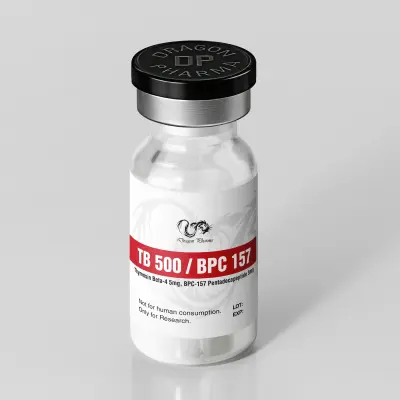
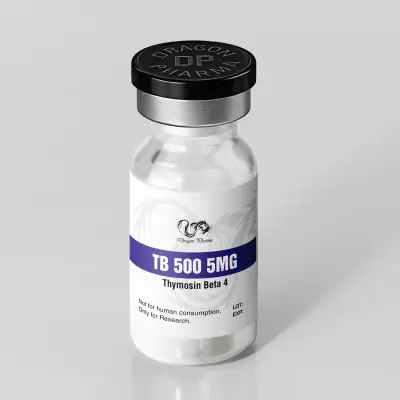
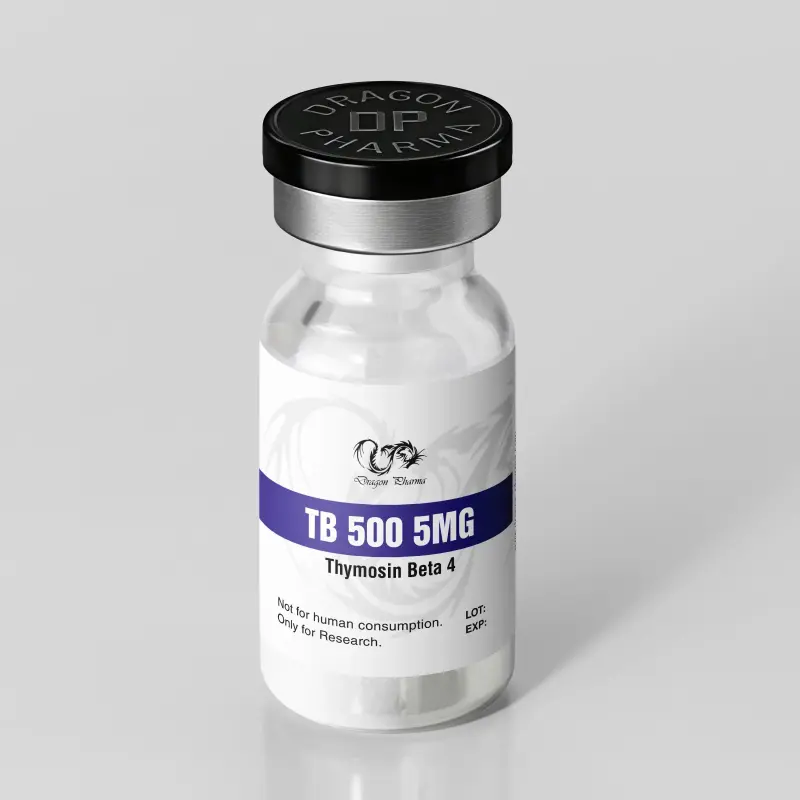
TB 500
Injection · 5mg · vial
$24.00
$40.00
You will save $16.00
Compound ID
TB 500
Strength
5 mg/vial
Form
Lyophilized Powder
Packaging
2 mL Vial
Classification
Synthetic Peptide (Repair & Recovery)
Active Substance
Thymosin Beta-4
Active Half-Life
2.5–3 Days
Properties
Shipping
Not available in this combination
Product overview
Dragon Pharma TB-500 (Thymosin Beta-4)
Dragon Pharma TB-500 is a premium-quality synthetic peptide manufactured to rigorous laboratory standards for scientific and research applications. TB-500 is a synthetic analogue of Thymosin Beta-4 (Tβ4), a naturally occurring 43-amino-acid peptide that is widely distributed throughout mammalian tissues and recognized for its involvement in cellular migration, tissue remodeling, angiogenesis, and regenerative biology.
Thymosin Beta-4 functions as a multifunctional regulatory peptide with several biologically active regions responsible for distinct physiological processes. The N-terminal region has been investigated for anti-inflammatory and antifibrotic activity, while the central actin-binding domain containing the LKKTET motif plays an important role in cytoskeletal organization, endothelial cell migration, angiogenesis, and wound repair. TB-500 represents the biologically active region of this peptide and has become one of the most extensively studied compounds in regenerative medicine and tissue engineering.
Researchers continue investigating TB-500 in laboratory models involving connective tissue repair, cardiovascular biology, skeletal muscle regeneration, liver physiology, ocular healing, neurological research, stem cell biology, and extracellular matrix remodeling.
Every batch of Dragon Pharma TB-500 is manufactured under strict quality control procedures to ensure exceptional purity, consistency, and molecular integrity. The peptide is supplied as a lyophilized (freeze-dried) powder without unnecessary fillers, preserving stability during storage while providing dependable performance for laboratory research.
Peptide Specifications
| Property | Value |
|---|---|
| Product | Dragon Pharma TB-500 |
| Peptide Type | Synthetic Thymosin Beta-4 Analogue |
| Parent Peptide | Thymosin Beta-4 (43 Amino Acids) |
| Peptide Sequence | Ac-Ser-Asp-Lys-Pro-Asp-Met-Ala-Glu-Ile-Glu-Lys-Phe-Asp-Lys-Ser-Lys-Leu-Lys-Lys-Thr-Glu-Thr-Gln-Glu-Lys-Asn-Pro-Leu-Pro-Ser-Lys-Glu-Thr-Ile-Glu-Gln-Glu-Lys-Gln-Ala-Gly-Glu-Ser |
| Molecular Formula | C212H350N56O78S |
| Molecular Weight | 4963 g/mol |
| CAS Number | 77591-33-4 |
| PubChem CID | 16132341 |
| Synonyms | Thymosin Beta-4, Timbetasin, Thymosin Beta-4 Acetate |
| Form | Lyophilized Peptide Powder |
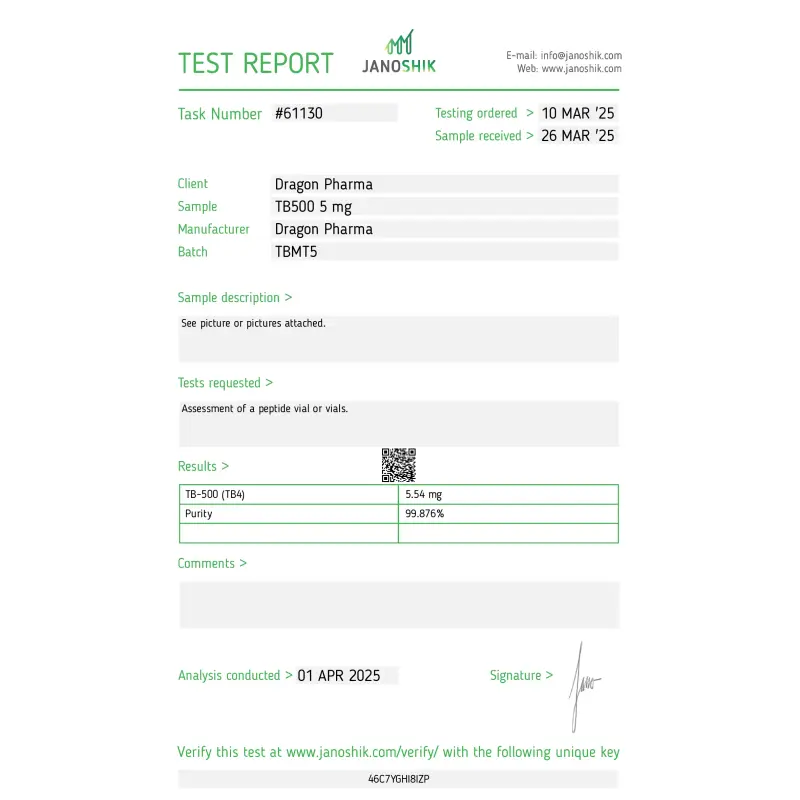
| Purity | Laboratory Tested |
| Research Classification | Research Use Only |
Molecular Structure and Biological Activity
Thymosin Beta-4 is an endogenous actin-binding peptide naturally expressed throughout numerous tissues where it participates in cellular organization, migration, differentiation, and tissue maintenance. The peptide regulates G-actin sequestration, allowing precise control of cytoskeletal remodeling that is essential for cell movement, wound repair, angiogenesis, and tissue regeneration.
TB-500 has been extensively investigated because it reproduces many of the biological activities associated with Thymosin Beta-4 while providing researchers with a stable synthetic peptide for laboratory investigation.
Experimental studies continue to examine its influence on endothelial cells, fibroblasts, keratinocytes, stem cells, cardiomyocytes, neuronal tissues, and connective tissue remodeling.
Mechanism of Action
Unlike many research peptides that target a single receptor, TB-500 appears to regulate multiple biological pathways associated with cellular organization and regenerative physiology.
Current laboratory investigations have explored its interaction with:
- G-actin binding
- Actin polymerization
- Cytoskeletal remodeling
- Cell migration
- Cell differentiation
- Cellular proliferation
- Stem cell recruitment
- Angiogenesis
- Neovascularization
- Endothelial cell migration
- Fibroblast migration
- Keratinocyte migration
- Extracellular matrix remodeling
- Matrix Metalloproteinases (MMPs)
- Integrin signaling
- VEGF signaling
- Anti-inflammatory pathways
- Anti-fibrotic signaling
- Autophagy
- Oxidative stress regulation
- Apoptosis inhibition
These interconnected pathways contribute to experimental models investigating regenerative medicine, tissue engineering, wound healing, cardiovascular biology, and organ repair.
Areas of Scientific Research
Tissue Repair and Regeneration
TB-500 has become one of the most extensively investigated regenerative peptides because of its involvement in multiple biological processes associated with tissue repair.
Experimental studies have examined:
- Tissue regeneration
- Wound healing
- Cellular migration
- Cell survival
- Connective tissue repair
- Tissue remodeling
- Stem cell maturation
- Extracellular matrix organization
- Regenerative biology
These investigations continue to improve understanding of coordinated tissue repair mechanisms.
Angiogenesis and Vascular Biology
The actin-binding properties of TB-500 have made it an important research tool for studying angiogenesis and vascular development.
Published research has examined:
- Blood vessel formation
- Endothelial cell migration
- Microvascular growth
- Neovascularization
- VEGF signaling
- Capillary development
- Vascular remodeling
- Endothelial function
Researchers continue evaluating its role in vascular regeneration and tissue perfusion.
Connective Tissue Research
Experimental investigations have explored the influence of TB-500 on connective tissue physiology.
Research includes:
- Collagen organization
- Fibroblast migration
- Tendon biology
- Ligament repair
- Skeletal muscle regeneration
- Extracellular matrix remodeling
- Tissue homeostasis
- Cellular adhesion
These biological activities continue to make TB-500 an important peptide for regenerative medicine research.
Central Nervous System Research
Experimental investigations have examined Thymosin Beta-4 in models involving neurological repair and nervous system development.
Published research has explored:
- Neurogenesis
- Neural tissue regeneration
- Stem cell differentiation
- Angiogenesis
- Anti-apoptotic signaling
- Neuroprotection
- Brain injury models
- Central nervous system repair
These findings continue expanding scientific understanding of regenerative mechanisms within neural tissues.
Liver and Metabolic Research
Recent laboratory studies have investigated the role of Thymosin Beta-4 in hepatic biology and metabolic regulation.
Current research includes:
- Liver regeneration
- Hepatic inflammation
- Lipid metabolism
- Oxidative stress
- Reactive oxygen species (ROS)
- Ferroptosis
- GPX4 signaling
- Cellular protection
Researchers continue exploring these pathways within experimental liver disease models.
Ocular and Corneal Research
TB-500 has also been investigated in ophthalmic research because of its ability to support tissue repair and regulate inflammation.
Experimental studies have examined:
- Corneal wound healing
- Ocular surface repair
- Keratitis models
- Cellular migration
- Anti-inflammatory activity
- Tissue regeneration
These investigations have contributed to growing interest in ocular regenerative biology.
Anti-Inflammatory and Cellular Protection Research
One of the defining characteristics of Thymosin Beta-4 research is its ability to regulate inflammatory responses while promoting cellular survival.
Current investigations include:
- Cytokine regulation
- Chemokine modulation
- Autophagy
- Oxidative stress reduction
- Anti-inflammatory signaling
- Cellular protection
- Tissue preservation
- Regenerative physiology
These mechanisms continue to be evaluated across numerous experimental disease models.
Lyophilized Peptide Technology
Dragon Pharma TB-500 is manufactured as a lyophilized peptide using advanced freeze-drying technology designed to maximize molecular stability and preserve peptide integrity.
Advantages of lyophilization include:
- Improved molecular stability
- Extended shelf life
- Enhanced storage characteristics
- Preservation of peptide purity
- Reliable laboratory reconstitution
- Reduced molecular degradation
No unnecessary fillers are incorporated during manufacturing.
Storage and Handling
For optimal stability, store the lyophilized peptide in a cool, dry environment protected from heat, moisture, and direct sunlight.
Following laboratory reconstitution, peptide solutions are commonly stored under refrigeration according to established laboratory protocols. Proper storage and handling help preserve molecular integrity throughout research applications.
Quality Assurance
Dragon Pharma follows rigorous manufacturing and quality assurance standards to deliver dependable research compounds.
Every production batch undergoes comprehensive laboratory evaluation, including:
- Identity verification
- Purity assessment
- Molecular weight confirmation
- Batch consistency analysis
- Quality control testing
- Contaminant screening
Analytical methods such as High-Performance Liquid Chromatography (HPLC) and Liquid Chromatography-Mass Spectrometry (LC-MS) are recognized industry standards for confirming peptide identity, purity, and molecular integrity.
Why Choose Dragon Pharma TB-500?
Researchers choose Dragon Pharma because of its commitment to pharmaceutical-quality manufacturing and dependable research compounds.
Key advantages include:
- Pharmaceutical-grade manufacturing
- High-purity lyophilized peptide
- No unnecessary fillers
- Batch-tested quality
- Stable molecular composition
- Advanced laboratory quality control
- Excellent peptide integrity
- Trusted Dragon Pharma manufacturing standards
Research Use Disclaimer
Dragon Pharma TB-500 is supplied exclusively for laboratory research and scientific investigation. This peptide is intended for qualified researchers and must only be used in accordance with applicable research regulations. It is not approved for human consumption, medical treatment, diagnosis, or therapeutic use.
Scientific References
The information presented on this page is based on peer-reviewed scientific literature investigating Thymosin Beta-4 (TB-500) in laboratory and preclinical research. Published studies have explored tissue regeneration, angiogenesis, cardiovascular biology, stem cell differentiation, liver physiology, ocular health, central nervous system repair, extracellular matrix remodeling, anti-inflammatory signaling, and regenerative medicine. Dragon Pharma supplies TB-500 exclusively for laboratory research purposes. This compound is not intended for human consumption, diagnosis, or therapeutic use.
- Philp D, Kleinman HK. Animal Studies with Thymosin β4, a Multifunctional Tissue Repair and Regeneration Peptide. Annals of the New York Academy of Sciences. 2010.
DOI: https://doi.org/10.1111/j.1749-6632.2010.05479.x - Renga G, Oikonomou V, Stincardini C, et al. Thymosin β4 Limits Inflammation Through Autophagy. Expert Opinion on Biological Therapy. 2018.
DOI: https://doi.org/10.1080/14712598.2018.1473854 - Bjørklund G, Dadar M, Aaseth J, Chirumbolo S. Thymosin β4: A Multi-Faceted Tissue Repair Stimulating Protein in Heart Injury. Current Medicinal Chemistry. 2019.
DOI: https://doi.org/10.2174/0929867326666190716125456 - Zhang G, Murthy K, Pare R, Qian Y. Protective Effect of Tβ4 on Central Nervous System Tissues and Its Developmental Prospects. European Journal of Inflammation. 2020.
DOI: https://doi.org/10.1177/2058739220934559 - Gao J, Ying Y, Lin C, et al. Thymosin β4 and Actin: Binding Modes, Biological Functions and Clinical Applications. Current Protein & Peptide Science. 2022.
DOI: https://doi.org/10.2174/1389203724666221201093500 - Kim J, Joo H, Hong S. Thymosin Beta-4 Enhancing Therapeutic Efficacy of Human Adipose-Derived Stem Cells in Mouse Ischemic Hindlimb Model. Circulation Research. 2020.
DOI: https://doi.org/10.1161/RES.127.Suppl_1.469 - Bock-Marquette I, Maar K, Maar S, et al. Thymosin Beta-4 Denotes New Directions Towards Developing Anti-Aging Regenerative Therapies. International Immunopharmacology. 2023.
DOI: https://doi.org/10.1016/j.intimp.2023.109741 - Zhu Z, Zhang Y, Huang X, et al. Thymosin Beta-4 Alleviates Non-Alcoholic Fatty Liver Disease by Inhibiting Ferroptosis via GPX4. European Journal of Pharmacology. 2021.
DOI: https://doi.org/10.1016/j.ejphar.2021.174351 - Sosne G, Berger EA. Thymosin Beta-4: A Potential Novel Adjunct Treatment for Bacterial Keratitis. International Immunopharmacology. 2023.
DOI: https://doi.org/10.1016/j.intimp.2023.109953