 Domestic & International
-40% OFF
Domestic & International
-40% OFF
Dragon Pharma, Europe
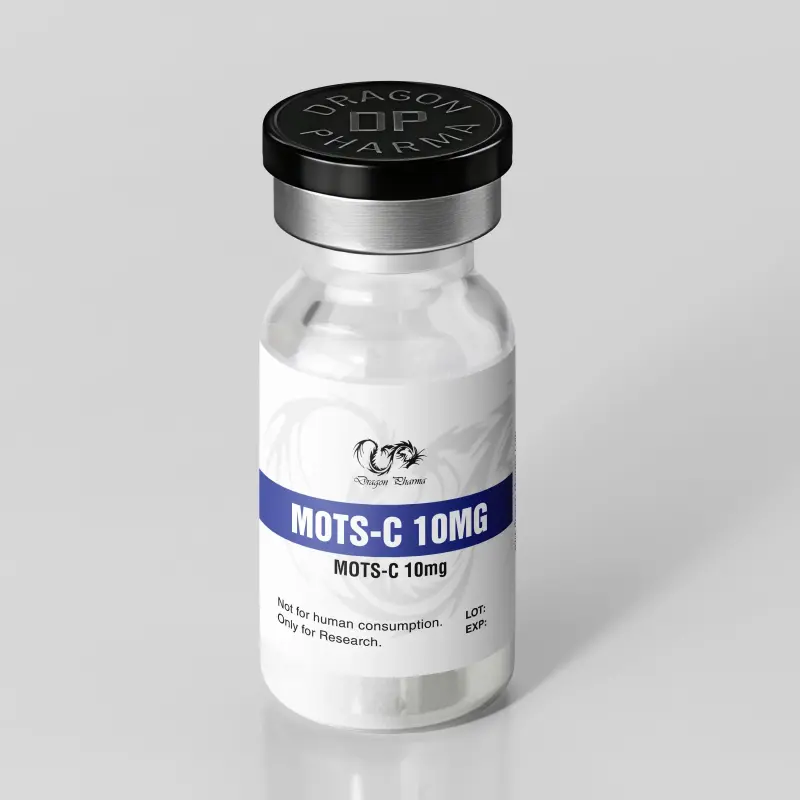
MOTS-c 10
Injection · 10mg · vial
$39.00
$65.00
You will save $26.00
Compound ID
MOTS-C
Strength
10 mg/vial
Form
Lyophilized Powder
Packaging
2 mL Vial
Classification
Mitochondrial-Derived Peptide
Active Substance
MOTS-C
Active Half-Life
~3–4 Hours
Properties
Shipping
Not available in this combination
Product overview
Dragon Pharma MOTS-c Peptide
Dragon Pharma MOTS-c is a research-grade synthetic 16-amino acid peptide corresponding to the mitochondrial open reading frame of the 12S rRNA-c (MOTS-c) — a naturally occurring regulatory signal encoded within the mitochondrial genome itself rather than nuclear DNA. Discovered and characterized in 2015, MOTS-c represents a paradigm shift in understanding mitochondrial biology: it is the first mitochondria-encoded peptide demonstrated to translocate to the cell nucleus and directly regulate nuclear gene expression in response to metabolic stress.
MOTS-c primarily targets skeletal muscle and acts as a systemic metabolic regulator through AMPK (AMP-activated protein kinase) pathway activation. Its documented research applications span metabolic regulation, insulin sensitivity modeling, skeletal muscle homeostasis, neuroprotection, longevity biology, and exercise physiology. A specific polymorphism in the MOTS-c encoding region has been linked to exceptional longevity in certain populations, adding a genetic dimension to its anti-aging research relevance.
Dragon Pharma MOTS-c is supplied as a lyophilized powder verified at ≥99% purity by HPLC, with LC-MS molecular identity confirmation. Every batch ships with an independent third-party Certificate of Analysis. For research use only.
Compound Specifications
| Property | Value |
|---|---|
| Product | Dragon Pharma MOTS-c |
| Full Name | Mitochondrial Open Reading Frame of the 12S rRNA-c |
| Peptide Type | Synthetic 16-amino acid mitochondria-derived peptide (MDP) |
| Peptide Sequence | Met-Arg-Trp-Gln-Glu-Met-Gly-Tyr-Ile-Phe-Tyr-Pro-Arg-Lys-Leu-Arg |
| Molecular Formula | C101H152N28O22S2 |
| Molecular Weight | 2174.6 g/mol |
| CAS Number | 1627580-64-6 |
| PubChem CID | 255386757 |
| Genome Origin | Mitochondrial genome — 12S rRNA gene |
| Discovery Year | 2015 (Lee et al., Cell Metabolism) |
| Primary Target | Skeletal muscle; AMPK pathway activation |
| Key Mechanism | Folate cycle inhibition → AICAR accumulation → AMPK activation; nuclear translocation for gene regulation |
| Form | Lyophilized powder |
| Purity | ≥99% (HPLC verified) |
| Identity Verification | LC-MS (sequence + mass confirmed) |
| COA | Independent third-party, batch-specific |
| Storage (lyophilized) | -20°C, protected from light; stable 24+ months |
| Storage (reconstituted) | 2–8°C, use within 28 days |
| Reconstitution | Bacteriostatic water, aseptic conditions |
| Research Classification | Research use only |
| Manufacturer | Dragon Pharma |
What Makes MOTS-c Unique in Peptide Research
Most research peptides are encoded by nuclear DNA. MOTS-c is not. It is encoded within the mitochondrial genome — specifically within the 12S rRNA gene — making it one of a small and recently identified class of mitochondria-derived peptides (MDPs) that communicate between the mitochondrion and the rest of the cell and organism.
This genomic origin is biologically significant for two reasons. First, it places MOTS-c at the intersection of mitochondrial function and systemic metabolism in a way that nuclear-encoded peptides cannot occupy. Second, the mitochondrial genome is maternally inherited and accumulates mutations at a different rate than nuclear DNA — meaning MOTS-c-related polymorphisms carry implications for evolutionary biology, population longevity studies, and the genetic architecture of aging that are distinct from most peptide research compounds.
The discovery that MOTS-c translocates from mitochondria to the cell nucleus in response to metabolic stress — where it then regulates nuclear gene expression — represents a fundamentally new understanding of mitochondrial signaling. Rather than being passive energy producers, mitochondria use peptides like MOTS-c as active regulatory signals that coordinate the cell's response to metabolic challenge across compartments.
MOTS-c plasma levels decline with age in humans, positioning it as a candidate biomarker for metabolic aging and a research tool for studying the relationship between mitochondrial signaling capacity and age-related physiological decline.
Mechanism of Action
Folate Cycle Inhibition and AMPK Activation
MOTS-c's primary metabolic mechanism operates through inhibition of the folate cycle — a metabolic pathway involved in one-carbon metabolism and de novo purine synthesis. By inhibiting the folate cycle, MOTS-c causes accumulation of 5-aminoimidazole-4-carboxamide-1-β-D-ribofuranoside (AICAR) — an endogenous AMPK activator. This AICAR accumulation activates AMPK independently of the cellular AMP:ATP ratio, a mechanistically distinct route of AMPK engagement compared to direct energy depletion.
AMPK (AMP-activated protein kinase) is the cell's master energy sensor — a kinase that, when activated, triggers a coordinated metabolic response promoting energy production and reducing energy consumption. Key downstream effects of MOTS-c-mediated AMPK activation include:
- GLUT4 translocation — enhanced glucose transporter type 4 expression in skeletal muscle membranes, increasing glucose uptake independent of insulin signaling
- Lipid β-oxidation enhancement — increased fatty acid catabolism for energy production in metabolically stressed tissues
- Mitochondrial biogenesis — AMPK activation via PGC-1α promotes new mitochondria formation, expanding cellular energy production capacity
- Suppression of anabolic pathways — AMPK inhibits mTOR and other energy-consuming biosynthetic programs during metabolic stress
Nuclear Translocation and Gene Expression Regulation
Under conditions of metabolic stress, MOTS-c translocates from the mitochondria to the cell nucleus. In the nuclear environment, it interacts with stress-responsive transcription factors including NRF2 (nuclear factor erythroid 2-related factor 2), modulating gene programs associated with antioxidant responses and glucose metabolism. This nuclear activity is AMPK-dependent and represents a bidirectional mitochondria-nucleus communication axis not previously recognized in cell biology.
Anti-Inflammatory Signaling
Research has documented MOTS-c's inhibition of neuroinflammatory activation — specifically the suppression of astrocyte and microglial activation and reduction in proinflammatory cytokine production including TNF-α, IL-6, IL-1β, COX-2, and iNOS. These anti-inflammatory properties have been investigated in neuroprotection models of Alzheimer's disease pathology and traumatic brain injury.
Myostatin Suppression and Muscle Signaling
MOTS-c has been shown to reduce myostatin levels — a negative regulator of muscle mass — through the PTEN/AKT/FOXO1 signaling pathway, creating an anabolic environment in muscle tissue through anti-catabolic rather than direct anabolic mechanism. In exercise contexts, MOTS-c expression in skeletal muscle and circulation is induced by physical activity, establishing it as an endogenous exercise-responsive regulatory molecule.
Research Applications
Metabolic Regulation and Insulin Sensitivity Research
MOTS-c's primary and best-characterized research application is in metabolic biology. Lee et al. (2015) demonstrated in animal models that MOTS-c prevents diet-induced obesity and insulin resistance by enhancing glucose metabolism in skeletal muscle through the AMPK/GLUT4 axis. Research in high-fat diet models has examined its capacity to prevent hyperinsulinemia and improve insulin-stimulated glucose uptake, reduce hepatic steatosis, and support fat oxidation through the AMPK-PGC-1α pathway.
In postmenopausal models (ovariectomy-induced metabolic dysfunction), MOTS-c has been studied for its capacity to reduce fat mass, suppress inflammatory responses, sustain brown adipose tissue activity, and prevent weight gain and insulin resistance — creating a research platform for investigating hormonal transition-related metabolic dysfunction at the mitochondrial signaling level (Lu et al., 2019).
Skeletal Muscle Homeostasis and Physical Performance Research
Reynolds et al. (2021) established in Nature Communications that MOTS-c is an exercise-induced mitochondrial-encoded regulator of age-dependent physical decline and muscle homeostasis in both mice and humans. Key findings include:
- Exercise induces MOTS-c expression in skeletal muscle and circulation in human subjects
- MOTS-c treatment enhanced physical performance in young, middle-aged, and old mice — across age groups
- MOTS-c regulates nuclear genes related to metabolism and proteostasis in skeletal muscle
- MOTS-c aids myoblast adaptation to metabolic stress, supporting muscle function maintenance
Kumagai et al. (2021) further documented that MOTS-c reduces myostatin and muscle atrophy signaling through the PTEN/AKT/FOXO1 pathway, suggesting research utility in sarcopenia and insulin resistance-induced muscle wasting models.
Neuroprotection and Cognitive Function Research
Research in neurodegeneration models has examined MOTS-c for its capacity to reduce neuroinflammation and improve cognitive function endpoints. Jiang et al. (2021) demonstrated that peripheral administration of a cell-penetrating MOTS-c analogue enhanced memory and reduced Aβ1-42- or LPS-induced memory impairment through neuroinflammation inhibition in preclinical models. Li et al. (2024) documented neuroprotective mechanisms in traumatic brain injury mouse models, including enhanced lipid β-oxidation for energy provision to the injured brain and reduced molecular damage and cell death.
Longevity and Anti-Aging Research
Fuku et al. (2015) identified a specific polymorphism in the MOTS-c encoding region of the mitochondrial genome that is associated with exceptional longevity in certain human populations — providing genetic evidence for MOTS-c's role in the biology of aging beyond its pharmacological effects. Mohtashami et al. (2022) reviewed MOTS-c's position within human aging and age-related disease, noting that circulating MOTS-c levels decline with age and that this decline may contribute to the metabolic deterioration characteristic of normal aging.
Cardiac Research (2025 Update)
A 2025 publication in Frontiers in Physiology (Pham et al.) demonstrated that MOTS-c restores mitochondrial respiration in type 2 diabetic heart tissue, adding cardiovascular research to the compound's application profile. This represents an active and expanding research front, extending MOTS-c's relevance from metabolic and musculoskeletal biology into cardiac mitochondrial function.
Quality Assurance
At 2174.6 g/mol, MOTS-c is a significantly larger and more structurally complex research peptide than shorter bioregulators. Synthesis complexity scales with chain length — a 16-residue peptide with two methionine residues and multiple aromatic amino acids presents more synthesis challenges than tripeptides or decapeptides. This makes independent sequence verification by LC-MS particularly important for confirming that the delivered compound matches the target sequence precisely.
- HPLC purity — ≥99% confirmed per batch by reverse-phase chromatography
- LC-MS identity verification — sequence confirmation of Met-Arg-Trp-Gln-Glu-Met-Gly-Tyr-Ile-Phe-Tyr-Pro-Arg-Lys-Leu-Arg and 2174.6 g/mol molecular weight
- Sterility and endotoxin screening — per batch specification
- Residual solvent screening — clean synthesis confirmation
- Independent third-party COA per batch — lot-traceable from vial label to laboratory documentation
Storage and Handling
Lyophilized powder: Store at -20°C, protected from light and moisture. Stable for 24 months or longer. No cold chain required during standard domestic shipping in lyophilized form. Allow vial to equilibrate to room temperature before opening.
Reconstituted solution: Store at 2–8°C. Use within 28 days. Avoid repeated freeze-thaw cycles.
Reconstitution: Add bacteriostatic water slowly against the inner vial wall. Swirl gently until dissolved — do not shake or vortex. Maintain aseptic conditions throughout.
For research use only. Not for human consumption, veterinary use, or therapeutic application.
Key Features
- ✔ Mitochondrial genome origin — unique research class — MOTS-c is encoded by mitochondrial DNA, not nuclear DNA; as an MDP it belongs to a newly characterized class of intercellular regulatory signals with no equivalent in conventional peptide pharmacology
- ✔ Nuclear translocation capability — documented mitochondria-to-nucleus signaling under metabolic stress; a research axis that conventional peptides cannot access
- ✔ AMPK activation via folate cycle inhibition — mechanistically distinct from direct AMPK activators; AICAR-mediated activation independent of cellular energy status
- ✔ Exercise-induced endogenous expression in humans — documented in Reynolds et al. (2021); positions MOTS-c as a legitimate exercise physiology research tool with human relevance
- ✔ Longevity-linked genetic polymorphism — MOTS-c encoding region variant associated with exceptional human longevity; rare genetic-pharmacological research bridge
- ✔ Nine peer-reviewed references — broad literature base spanning Cell Metabolism, Nature Communications, ACS Chemical Neuroscience, IJMS, and Aging Cell
- ✔ ≥99% HPLC purity with LC-MS sequence verification — complete identity confirmation for a 16-residue peptide where synthesis complexity elevates sequence error risk
- ✔ Independent third-party COA per batch — traceable lot documentation from third-party laboratory
Frequently Asked Questions About Dragon Pharma MOTS-c
What is Dragon Pharma MOTS-c?
Dragon Pharma MOTS-c is a research-grade synthetic 16-amino acid peptide (Met-Arg-Trp-Gln-Glu-Met-Gly-Tyr-Ile-Phe-Tyr-Pro-Arg-Lys-Leu-Arg) corresponding to the Mitochondrial Open Reading Frame of the 12S rRNA-c, a naturally occurring regulatory peptide encoded by the mitochondrial genome. Supplied as lyophilized powder at ≥99% HPLC purity with LC-MS identity confirmation and independent batch-specific COA. For research use only.
Why is MOTS-c considered unique among research peptides?
MOTS-c is encoded by the mitochondrial genome rather than nuclear DNA, making it one of only a small number of mitochondria-derived peptides (MDPs) identified to date. It is the first MDP demonstrated to translocate from mitochondria to the cell nucleus in response to metabolic stress and directly regulate nuclear gene expression — establishing a new category of mitochondrial signaling not previously recognized in cell biology.
How does MOTS-c activate AMPK?
MOTS-c activates AMPK through an indirect mechanism distinct from direct energy depletion. It inhibits the folate cycle — a one-carbon metabolic pathway — causing accumulation of AICAR (5-aminoimidazole-4-carboxamide-1-β-D-ribofuranoside). AICAR is an endogenous AMPK activator, triggering AMPK activation independently of the cellular AMP:ATP ratio. This indirect, folate-cycle-dependent mechanism is mechanistically unique among characterized AMPK activators.
What research has been published on MOTS-c and muscle biology?
Reynolds et al. (2021, Nature Communications) established MOTS-c as an exercise-induced mitochondrial-encoded regulator of age-dependent physical decline and muscle homeostasis, documenting physical performance enhancement across young, middle-aged, and old animal subjects and exercise-induced MOTS-c expression in human skeletal muscle and circulation. Kumagai et al. (2021) documented MOTS-c reduction of myostatin levels and muscle atrophy signaling through the PTEN/AKT/FOXO1 pathway in preclinical models.
What is the MOTS-c longevity polymorphism?
Fuku et al. (2015, Aging Cell) identified a specific variant in the MOTS-c-encoding region of the mitochondrial 12S rRNA gene that is associated with exceptional longevity in certain human populations. This finding provides genetic evidence — beyond pharmacological observations — that the MOTS-c signaling system plays a role in the biology of human lifespan and age-related physiological maintenance.
What neuroprotection research has been conducted with MOTS-c?
Jiang et al. (2021) demonstrated that a cell-penetrating MOTS-c analogue enhanced memory and reduced Aβ1-42- and LPS-induced memory impairment in preclinical models through neuroinflammation inhibition, including suppression of astrocyte/microglial activation and reduction in TNF-α, IL-6, IL-1β, COX-2, and iNOS. Li et al. (2024) documented neuroprotective mechanisms in traumatic brain injury mouse models, including enhanced lipid β-oxidation for brain energy provision.
What is the molecular weight of Dragon Pharma MOTS-c?
MOTS-c (Met-Arg-Trp-Gln-Glu-Met-Gly-Tyr-Ile-Phe-Tyr-Pro-Arg-Lys-Leu-Arg) has a molecular weight of 2174.6 g/mol and a molecular formula of C101H152N28O22S2. CAS number is 1627580-64-6 and PubChem CID is 255386757.
What is the WADA classification status of MOTS-c?
WADA added MOTS-c to its Prohibited List in 2024 as an AMPK activator, citing its exercise-mimetic metabolic properties. Researchers designing protocols involving MOTS-c in sports science or exercise physiology contexts should document this classification in institutional and ethical review materials. Dragon Pharma MOTS-c is supplied for in vitro laboratory research use only.
How should Dragon Pharma MOTS-c be stored?
Lyophilized powder at -20°C, protected from light, stable for 24 months or longer. After reconstitution with bacteriostatic water, store at 2–8°C and use within 28 days. Avoid repeated freeze-thaw cycles to preserve peptide integrity.
Is Dragon Pharma MOTS-c intended for human use?
No. Dragon Pharma MOTS-c is supplied strictly for in vitro laboratory research by qualified investigators. It is intended exclusively for research purposes and is not for human consumption, therapeutic use, or veterinary application. All use must comply with applicable institutional and regulatory requirements.
Scientific References
The information presented on this page draws from published peer-reviewed scientific literature investigating MOTS-c in laboratory and preclinical research settings. The following references document the specific findings described above.
- Kim K, Son J, Benayoun B, Lee C. (2018). The Mitochondrial-Encoded Peptide MOTS-c Translocates to the Nucleus to Regulate Nuclear Gene Expression in Response to Metabolic Stress. Cell Metabolism, 28(3), 516–524.e7. https://doi.org/10.1016/j.cmet.2018.06.008
- Lu H, Wei M, Zhai Y, Li Q, Ye Z, Wang L, Luo W, Chen J, Lu Z. (2019). MOTS-c peptide regulates adipose homeostasis to prevent ovariectomy-induced metabolic dysfunction. Journal of Molecular Medicine, 97, 473–485. https://doi.org/10.1007/s00109-018-01738-w
- Lee C, Zeng J, Drew B, Sallam T, Martín-Montalvo A, Wan J, Kim S, Mehta H, Hevener A, De Cabo R, Cohen P. (2015). The mitochondrial-derived peptide MOTS-c promotes metabolic homeostasis and reduces obesity and insulin resistance. Cell Metabolism, 21(3), 443–454. https://doi.org/10.1016/j.cmet.2015.02.009
- Li F, Jia Y, Fang J, Gong L, Zhang Y, Wei S, Wu L, Jiang P. (2024). Neuroprotective Mechanism of MOTS-c in TBI Mice: Insights from Integrated Transcriptomic and Metabolomic Analyses. Drug Design, Development and Therapy, 18, 2971–2987. https://doi.org/10.2147/DDDT.S460265
- Jiang J, Chang X, Nie Y, Shen Y, Liang X, Peng Y, Chang M. (2021). Peripheral Administration of a Cell-Penetrating MOTS-c Analogue Enhances Memory and Attenuates Aβ1-42- or LPS-Induced Memory Impairment through Inhibiting Neuroinflammation. ACS Chemical Neuroscience. https://doi.org/10.1021/acschemneuro.0c00782
- Reynolds J, Lai R, Woodhead J, Joly J, Mitchell C, Cameron-Smith D, Lu R, Cohen P, Graham N, Benayoun B, Merry T, Lee C. (2021). MOTS-c is an exercise-induced mitochondrial-encoded regulator of age-dependent physical decline and muscle homeostasis. Nature Communications. https://doi.org/10.1038/s41467-020-20790-0
- Kumagai H, Coelho A, Wan J, Mehta H, Yen K, Huang A, Zempo H, Fuku N, Maeda S, Oliveira P, Cohen P, Kim S. (2021). MOTS-c reduces myostatin and muscle atrophy signaling. American Journal of Physiology — Endocrinology and Metabolism. https://doi.org/10.1152/ajpendo.00275.2020
- Mohtashami Z, Singh M, Salimiaghdam N, Ozgul M, Kenney M. (2022). MOTS-c, the Most Recent Mitochondrial Derived Peptide in Human Aging and Age-Related Diseases. International Journal of Molecular Sciences, 23. https://doi.org/10.3390/ijms231911991
- Fuku N, Pareja-Galeano H, Zempo H, Alis R, Arai Y, Lucia A, Hirose N. (2015). The mitochondrial-derived peptide MOTS-c: a player in exceptional longevity? Aging Cell, 14, 921–923. https://doi.org/10.1111/acel.12389
Dragon Pharma supplies MOTS-c exclusively for laboratory research purposes.
Been on it for about a month now and I notice a boost of energy. Stacking this with reta is working perfect for me