 -40% OFF
Dragon Pharma, Europe
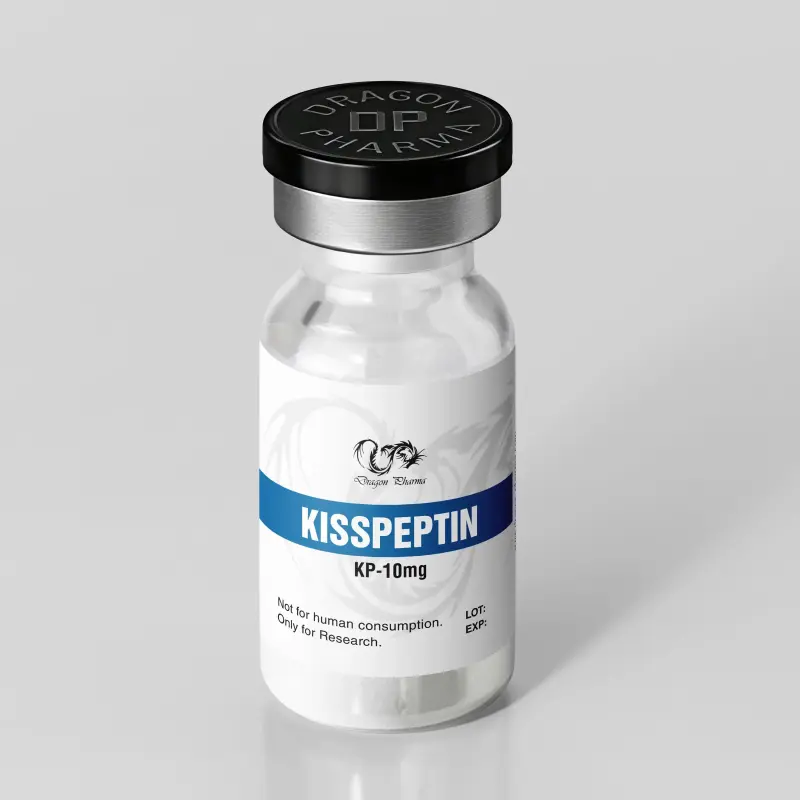
Kisspeptin
Injection · 10mg · vial
$48.00
$80.00
You will save $32.00
Compound ID
Kisspeptin
Strength
10 mg/vial
Form
Lyophilized Powder
Packaging
2 mL Vial
Classification
Research Peptide / Hormone Secretagogue
Active Substance
Kisspeptin
Active Half-Life
Approximately 3–4 Hours
Properties
Shipping
Not available in this combination
Product overview
Dragon Pharma Kisspeptin-10 Peptide
Dragon Pharma Kisspeptin-10 is a research-grade synthetic decapeptide corresponding to the C-terminal 45–54 fragment of the KISS1 gene product. Carrying the sequence Tyr-Asn-Trp-Asn-Ser-Phe-Gly-Leu-Arg-Phe-NH₂ with a defining C-terminal amide characteristic of the kisspeptin RFamide family, Kisspeptin-10 is the shortest member of the kisspeptin peptide family that retains full binding activity at its cognate receptor KISS1R — also designated GPR54.
The compound has been characterized in laboratory research spanning neuroendocrine signaling, hypothalamic-pituitary-gonadal (HPG) axis regulation, cell motility inhibition, extracellular matrix biology, neuronal protection models, and cardiac fibroblast studies. Its established role as the primary endogenous ligand for KISS1R makes it a well-validated tool compound for GPR54 pharmacology and receptor signaling research across a broad range of in vitro applications.
Dragon Pharma Kisspeptin-10 is supplied as a lyophilized powder verified at ≥99% purity by HPLC, with LC-MS molecular identity confirmation and C-terminal amidation verification. Every batch ships with an independent third-party Certificate of Analysis. For research use only.
Compound Specifications
| Property | Value |
|---|---|
| Product | Dragon Pharma Kisspeptin-10 |
| Common Names | KP-10, Metastin (45–54), KiSS-1 (45–54) |
| Peptide Type | Synthetic decapeptide (10 residues) |
| Amino Acid Sequence | Tyr-Asn-Trp-Asn-Ser-Phe-Gly-Leu-Arg-Phe-NH₂ (YNWNSFGLRF-NH₂) |
| Gene Source | C-terminal fragment (residues 45–54) of KISS1 gene product |
| Cognate Receptor | KISS1R (GPR54) — Gq/11-coupled class A GPCR |
| Molecular Formula | C₆₃H₈₃N₁₇O₁₄ |
| Molecular Weight | 1302.5 g/mol |
| Monoisotopic Mass | 1301.63 Da |
| CAS Number | 374675-21-5 |
| PubChem CID | 25240297 |
| InChIKey | RITKWYDZSSQNJI-INXYWQKQSA-N |
| C-Terminal Modification | Amide (-NH₂) — defining feature of kisspeptin RFamide family |
| Source | Synthetic (controlled peptide synthesis) |
| Form | Lyophilized white powder |
| Purity | ≥99% (HPLC verified) |
| Identity Verification | LC-MS (sequence + mass + C-terminal amidation confirmed) |
| COA | Independent third-party, batch-specific |
| Solubility | Soluble in water; bacteriostatic water for reconstitution |
| Storage (lyophilized) | -20°C, protected from light; stable 24+ months |
| Storage (reconstituted) | 2–8°C, use within 28–30 days |
| Research Classification | Research use only |
| Manufacturer | Dragon Pharma |
Molecular Biology and Receptor Background
Kisspeptin-10 is the C-terminal decapeptide fragment of the KISS1 gene product — the shortest naturally occurring kisspeptin family member that retains complete binding affinity at KISS1R (GPR54). The kisspeptin family includes four processed peptide products: kisspeptin-54, kisspeptin-14, kisspeptin-13, and kisspeptin-10. All four share the same C-terminal decapeptide sequence, with kisspeptin-10 representing the biologically active core unit that defines receptor interaction across the entire family.
KISS1R (GPR54) is a class A Gq/11-coupled G protein-coupled receptor located at chromosome 19p13.3. Upon binding kisspeptin-10, KISS1R activates phospholipase C (PLC) via Gq/11, generating inositol trisphosphate (IP3) and diacylglycerol (DAG). This initiates intracellular calcium mobilization, protein kinase C activation, and downstream ERK1/2 phosphorylation cascades. Binding assays using CHO-KISS1R membrane preparations have characterized Ki values of approximately 1.59 nM (rat) and 2.33 nM (human KISS1R), with EC50 approximately 1.0 nM in CHO-GPR54 IP accumulation assays.
The KISS1 gene was originally identified as a metastasis suppressor in melanoma research — the product name KiSS-1 reflects its discovery context as a "Kisspeptin Suppressor Sequence" — before the central role of KISS1R in reproductive endocrinology was established through loss-of-function genetic studies in the mid-2000s. This dual research heritage — metastasis biology and neuroendocrine regulation — defines the breadth of laboratory applications for which KP-10 serves as a tool compound.
The C-terminal amide (-NH₂) modification is an essential structural feature. It defines Kisspeptin-10 as a member of the RFamide neuropeptide superfamily and is required for KISS1R binding potency. Dragon Pharma's LC-MS verification specifically confirms C-terminal amidation alongside sequence identity and molecular mass — a critical quality checkpoint that distinguishes the correctly modified research-grade compound from synthesis artefacts lacking the amide terminus.
Mechanism of Action
KISS1R Activation and Gq/11 Signaling Cascade
Kisspeptin-10 binds KISS1R with sub-nanomolar to low-nanomolar affinity, triggering a well-characterized intracellular signaling cascade. Receptor activation mobilizes Gq/11, which stimulates phospholipase C to generate IP3 and DAG from membrane phosphoinositide substrates. IP3 triggers endoplasmic reticulum calcium release, producing a rapid intracellular Ca²⁺ surge. DAG activates protein kinase C, which phosphorylates downstream effectors including ERK1/2. The complete cascade — from receptor binding through ERK1/2 activation — provides multiple quantifiable research endpoints: IP1 accumulation (HTRF assay), Ca²⁺ flux (fluorometric), ERK1/2 phosphorylation (Western blot/ELISA), and β-arrestin recruitment assays.
Neuroendocrine Signaling and HPG Axis Regulation
In hypothalamic research models, KISS1R activation by KP-10 stimulates GnRH (gonadotropin-releasing hormone) release from KNDy neurons (co-expressing kisspeptin, neurokinin B, and dynorphin). This positions kisspeptin-10 at the apex of the hypothalamic-pituitary-gonadal (HPG) axis — the master regulatory cascade governing gonadotropin secretion. GnRH release drives pituitary LH (luteinizing hormone) and FSH (follicle-stimulating hormone) secretion, which in turn regulate gonadal steroid and gametogenesis biology downstream.
Cell Motility Inhibition
Independent of its neuroendocrine role, kisspeptin-10 has been characterized as an inhibitor of cell migration in placental and trophoblast cell models. In HTR8/SVneo cells, KP-10 reduced migration through an ERK1/2-p90rsk-GSK3β-FAK signaling feedback loop (Roseweir et al., 2012). In first-trimester trophoblast cultures, KP-10 raised intracellular calcium and inhibited cell motility without altering proliferation rates (Bilban et al., 2004) — consistent with a signaling-specific rather than cytotoxic mechanism of action.
KISS1R-Independent Neuroprotective Activity
A distinct and mechanistically significant finding is KP-10's documented neuroprotective activity in SH-SY5Y-derived cholinergic neurons via a pathway that operates independently of KISS1R. Simon et al. (2023) demonstrated that in neurons overexpressing wild-type or E46K mutant α-synuclein, kisspeptin-10 reduced apoptosis and mitochondrial depolarization through receptor-independent means. This finding opens a research avenue for investigating direct peptide-protein interactions that bypass GPR54 signaling entirely — mechanistically distinct from all other characterized KP-10 activities.
Cardiac Fibroblast and Extracellular Matrix Interactions
Radwańska et al. (2023) demonstrated that kisspeptin-10 increases intracellular collagen content in cardiac fibroblast cultures through focal adhesion kinase (FAK) phosphorylation, alongside shifts in matrix metalloproteinase and tissue inhibitor expression. This extends the documented biology of KP-10 beyond neuroendocrine and reproductive contexts into cardiovascular connective tissue research.
Research Applications
| Research Area | In Vitro Application |
|---|---|
| KISS1R / GPR54 pharmacology | Receptor binding characterization (Ki ~2.33 nM human), IP1 accumulation, Ca²⁺ flux, ERK1/2 phosphorylation, β-arrestin recruitment assays in KISS1R-expressing cell lines |
| Neuroendocrine signaling | HPG axis regulation studies; GnRH pulsatility models; KNDy neuron circuitry research; LH/FSH secretion pathway investigation |
| Cell motility research | Migration inhibition studies in trophoblast-derived cell models (HTR8/SVneo); ERK1/2-p90rsk-GSK3β-FAK feedback loop characterization |
| Extracellular matrix biology | MMP and TIMP expression studies; VEGF-A modulation downstream of KISS1R/ERK1/2; angiogenesis-related pathway investigation in trophoblast cultures |
| Neuronal protection models | α-synuclein-linked apoptosis and mitochondrial depolarization in SH-SY5Y cholinergic neurons; KISS1R-independent neuroprotective mechanism investigation |
| Cardiac fibroblast research | FAK phosphorylation and intracellular collagen content modulation; MMP/TIMP balance in myocardial fibroblast cultures |
| Radiolabeling and imaging research | Characterization of DOTA-conjugated analogues for gallium-68/lutetium-177 KISS1R-targeted radiotheranostic research (Kleynhans et al., 2025) |
| Metastasis suppression biology | KiSS-1/GPR54 system characterization in cancer cell line models; KISS1 expression analysis in melanoma, gastric, pancreatic, ovarian, and bladder cancer research contexts |
Kisspeptin Family: Understanding KP-10 in Context
Kisspeptin-10 is the shortest and most widely used member of a peptide family that all derive from the same KISS1 gene product but differ in chain length. All family members share the same C-terminal decapeptide sequence.
| Family Member | Residues | Notes |
|---|---|---|
| Kisspeptin-54 | 54 residues | Full-length KISS1 gene product; precursor to all shorter forms |
| Kisspeptin-14 | 14 residues | Processed fragment sharing C-terminal decapeptide |
| Kisspeptin-13 | 13 residues | Processed fragment sharing C-terminal decapeptide |
| Kisspeptin-10 (KP-10) | 10 residues | Shortest fragment retaining full KISS1R binding; predominant research tool compound |
For most in vitro research applications, Kisspeptin-10 is the preferred tool compound. Its smaller size simplifies synthesis, reduces production cost, and enables precise structure-activity studies. Receptor binding potency is equivalent to longer family members since the C-terminal decapeptide is the receptor interaction domain for the entire family.
Quality Assurance
Kisspeptin-10's C-terminal amide is not a cosmetic modification — it is a structural requirement for KISS1R binding potency and defines membership in the RFamide neuropeptide family. Standard HPLC purity analysis cannot distinguish between correctly amidated and non-amidated peptide, since both may show equivalent chromatographic purity. Dragon Pharma addresses this through LC-MS verification that explicitly confirms C-terminal amidation alongside sequence identity and 1302.5 g/mol molecular mass — providing complete chemical characterization per batch.
- HPLC purity — ≥99% confirmed; reverse-phase chromatographic purity analysis
- LC-MS identity — sequence confirmation (YNWNSFGLRF-NH₂), molecular mass (1302.5 g/mol / monoisotopic 1301.63 Da), and C-terminal amidation verification
- Sterility and endotoxin screening — per batch specification
- Residual solvent screening — confirms clean synthesis
- Independent third-party COA per batch — traceable from vial label lot number to laboratory documentation; not reused across production runs
Storage and Handling
Lyophilized powder (unreconstituted): Store at -20°C, protected from light and moisture. Stable for 24 months or longer under these conditions. No cold chain required during standard domestic shipping as a lyophilized powder. Allow vial to equilibrate to room temperature before opening to prevent condensation.
Reconstituted solution: Store at 2–8°C (refrigerated). Use within 28–30 days. Avoid repeated freeze-thaw cycles, which compromise peptide integrity and assay reproducibility.
Reconstitution: Bacteriostatic water is the standard diluent. Introduce diluent slowly against the inner vial wall rather than directly into the lyophilized powder. Swirl gently until fully dissolved — do not shake or vortex. Maintain aseptic handling throughout. The decapeptide is water-soluble and dissolves readily at standard laboratory concentrations.
For research use only. Not for human consumption, veterinary use, or therapeutic application.
Key Features
- ✔ C-terminal amide verified by LC-MS — essential structural feature for KISS1R binding confirmed by mass spectrometry; not inferred from synthesis records alone
- ✔ ≥99% HPLC purity — highest research-grade threshold; suitable for receptor binding assays, cell signaling studies, and in vitro pharmacology
- ✔ Sub-nanomolar to low-nanomolar KISS1R affinity documented — Ki ~2.33 nM (human) characterizing it as a high-affinity GPR54 research ligand
- ✔ Multiple distinct research axes — neuroendocrine, cell motility, neuroprotection, cardiac fibroblast, and radiotheranostic applications documented in peer-reviewed literature
- ✔ Seven peer-reviewed references — more published research context than most decapeptides in the research market
- ✔ Lyophilized format — no fillers — maximum stability and assay compatibility; no excipients that could confound downstream experimental results
- ✔ Water-soluble — dissolves readily in bacteriostatic water; no organic co-solvent requirement for standard laboratory concentrations
- ✔ Batch-specific independent COA — per-lot documentation from third-party laboratory; not generic or reused
Frequently Asked Questions About Dragon Pharma Kisspeptin-10
What is Dragon Pharma Kisspeptin-10?
Dragon Pharma Kisspeptin-10 is a research-grade synthetic decapeptide (Tyr-Asn-Trp-Asn-Ser-Phe-Gly-Leu-Arg-Phe-NH₂) corresponding to the C-terminal 45–54 fragment of the KISS1 gene product. It is the shortest member of the kisspeptin family that retains full binding activity at KISS1R (GPR54). Supplied as lyophilized powder with ≥99% HPLC purity, LC-MS identity confirmation, and independent batch-specific COA. For research use only.
What is the difference between Kisspeptin-10 and Kisspeptin-54?
Kisspeptin-54 is the full-length precursor encoded by the KISS1 gene (54 residues). Kisspeptin-10 is the shortest processed C-terminal fragment (10 residues) that retains complete KISS1R binding activity. Both share the same C-terminal decapeptide sequence, which is the receptor interaction domain for the entire kisspeptin family. For most in vitro GPR54 pharmacology and receptor signaling research, KP-10 is the preferred tool compound due to simpler synthesis and equivalent receptor potency.
Why is the C-terminal amide important for Kisspeptin-10 research?
The C-terminal amide (-NH₂) is a structural requirement for KISS1R binding potency and defines Kisspeptin-10 as a member of the RFamide neuropeptide family. A non-amidated Kisspeptin-10 analogue would have substantially reduced or absent receptor binding affinity and would produce different research results. Dragon Pharma's LC-MS verification explicitly confirms C-terminal amidation — a quality checkpoint that HPLC purity analysis alone cannot provide.
What receptor does Kisspeptin-10 bind and with what affinity?
Kisspeptin-10 binds KISS1R (GPR54), a class A Gq/11-coupled G protein-coupled receptor. Characterized binding affinities include Ki approximately 1.59 nM (rat KISS1R) and 2.33 nM (human KISS1R). EC50 in CHO-GPR54 IP accumulation assays is approximately 1.0 nM, establishing KP-10 as a high-affinity endogenous receptor ligand suitable for pharmacological characterization studies.
What signaling pathways does KISS1R activation trigger?
KISS1R activation by Kisspeptin-10 engages Gq/11, which stimulates phospholipase C to generate IP3 and DAG. IP3 triggers intracellular calcium release from the endoplasmic reticulum; DAG activates protein kinase C. Downstream effectors include ERK1/2 phosphorylation. Research endpoints include IP1 accumulation (HTRF), Ca²⁺ flux assays (fluorometric), ERK1/2 phosphorylation (Western blot/ELISA), and β-arrestin recruitment.
What is the KISS1R-independent neuroprotective activity of KP-10?
Simon et al. (2023) demonstrated that Kisspeptin-10 mitigated α-synuclein-linked apoptosis and mitochondrial depolarization in SH-SY5Y-derived cholinergic neurons engineered to overexpress wild-type or E46K mutant α-synuclein. This neuroprotective effect was shown to operate independently of KISS1R binding, suggesting direct peptide-protein interactions that bypass GPR54 signaling — an area of active mechanistic investigation.
What is the molecular weight of Dragon Pharma Kisspeptin-10?
Kisspeptin-10 (Tyr-Asn-Trp-Asn-Ser-Phe-Gly-Leu-Arg-Phe-NH₂) has a molecular weight of 1302.5 g/mol (average) and a monoisotopic mass of 1301.63 Da. Its molecular formula is C₆₃H₈₃N₁₇O₁₄. CAS number is 374675-21-5 and PubChem CID is 25240297.
How should Dragon Pharma Kisspeptin-10 be stored?
Lyophilized powder should be stored at -20°C, protected from light. Stable for 24 months or longer in this condition. After reconstitution with bacteriostatic water, store at 2–8°C and use within 28–30 days. Avoid repeated freeze-thaw cycles.
What is the WADA classification status of Kisspeptin-10?
WADA has included kisspeptin and agonist analogues on the Prohibited List under S2.2.1 (Testosterone-Stimulating Peptides in Males). This reflects KP-10's indirect androgen pathway stimulation through KISS1R-mediated GnRH release driving downstream LH/FSH and testosterone production. Researchers involving kisspeptin-10 in protocols with sports-related or HPG axis contexts should address this in institutional and ethical review documentation. Dragon Pharma Kisspeptin-10 is supplied for in vitro research use only.
What radiolabeling research has been conducted with Kisspeptin-10?
Kleynhans et al. (2025) published characterization of a DOTA-conjugated Kisspeptin-10 analogue as a potential gallium-68/lutetium-177 pan-tumour radiopharmaceutical. The DOTA-conjugate retained KISS1R activation capacity comparable to unconjugated KP-10, measured by inositol phosphate accumulation in KISS1R-expressing HEK293 cells. This positions the KISS1R system as a target for receptor-targeted radiotheranostic imaging and therapeutic research.
Is Dragon Pharma Kisspeptin-10 intended for human use?
No. Dragon Pharma Kisspeptin-10 is supplied strictly for in vitro laboratory research by qualified investigators. It is intended exclusively for research purposes and is not for human consumption, therapeutic use, or veterinary application. All use must comply with applicable institutional and regulatory requirements.
Scientific References
The information presented on this page draws from published peer-reviewed scientific literature investigating Kisspeptin-10 and the KiSS-1/GPR54 system in laboratory and preclinical research settings. The following references document the specific research findings described above.
- Zhu N, Zhao M, Song Y, Ding L, Ni Y. (2020). The KiSS-1/GPR54 system: Essential roles in physiological homeostasis and cancer biology. Genes & Diseases, 9(1), 28–40. https://doi.org/10.1016/j.gendis.2020.07.008
- Kleynhans J, Reeve R, Driver CHS, Marjanovic-Painter B, Sathekge M, Zeevaart JR, Ebenhan T, Millar RP. (2025). Synthesis and characterisation of DOTA-kisspeptin-10 as a potential gallium-68/lutetium-177 pan-tumour radiopharmaceutical. Journal of Neuroendocrinology, 37(3), e13487. https://doi.org/10.1111/jne.13487
- Roseweir AK, Katz AA, Millar RP. (2012). Kisspeptin-10 inhibits cell migration in vitro via a receptor-GSK3 beta-FAK feedback loop in HTR8SVneo cells. Placenta, 33(5), 408–415. https://doi.org/10.1016/j.placenta.2012.02.001
- Bilban M, Ghaffari-Tabrizi N, Hintermann E, et al. (2004). Kisspeptin-10, a KiSS-1/metastin-derived decapeptide, is a physiological invasion inhibitor of primary human trophoblasts. Journal of Cell Science, 117(Pt 8), 1319–1328. https://doi.org/10.1242/jcs.00971
- Francis VA, Abera AB, Matjila M, Millar RP, Katz AA. (2014). Kisspeptin regulation of genes involved in cell invasion and angiogenesis in first trimester human trophoblast cells. PLoS One, 9(6), e99680. https://doi.org/10.1371/journal.pone.0099680
- Simon C, Soga T, Parhar I. (2023). Kisspeptin-10 Mitigates α-Synuclein-Mediated Mitochondrial Apoptosis in SH-SY5Y-Derived Neurons via a Kisspeptin Receptor-Independent Manner. International Journal of Molecular Sciences, 24(7), 6056. https://doi.org/10.3390/ijms24076056
- Radwańska P, Gałdyszyńska M, Piera L, Drobnik J. (2023). Kisspeptin-10 increases collagen content in the myocardium by focal adhesion kinase activity. Scientific Reports, 13(1), 19977. https://doi.org/10.1038/s41598-023-47224-3
Dragon Pharma supplies Kisspeptin-10 exclusively for laboratory research purposes.