 -40% OFF
Dragon Pharma, Europe
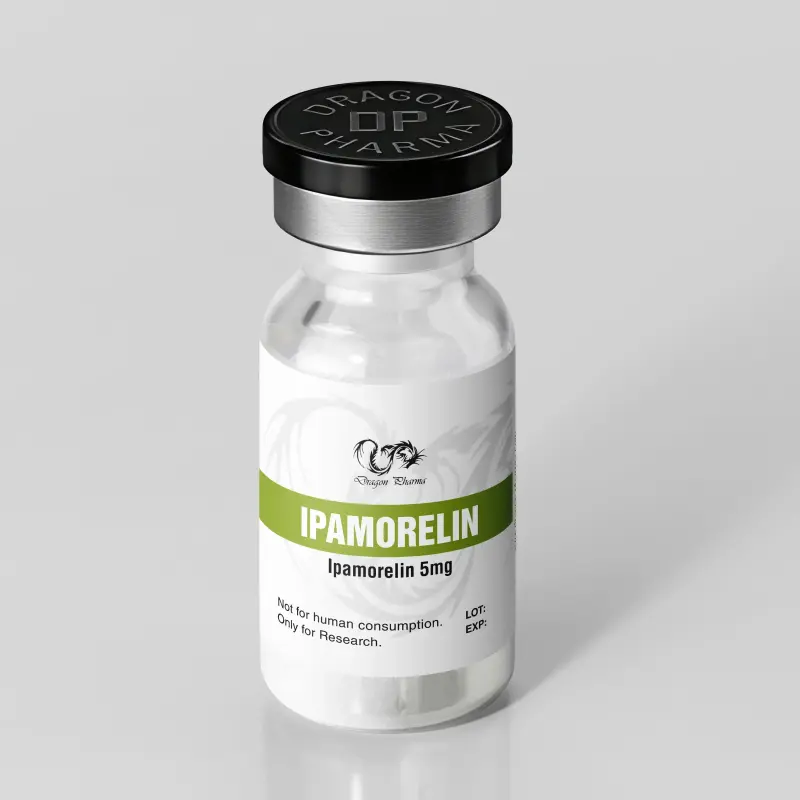
Ipamorelin
Injection · 5mg · vial
$57.00
$95.00
You will save $38.00
Compound ID
Ipamorelin
Strength
5 mg/vial
Form
Lyophilized Powder
Packaging
2 mL Vial
Classification
Growth Hormone Secretagogue (GHRP)
Active Substance
Ipamorelin
Active Half-Life
2 Hours
Properties
Shipping
Not available in this combination
Product overview
Pharmaceutical-Grade Ipamorelin for Research Applications
Dragon Pharma Ipamorelin is a premium-quality synthetic growth hormone secretagogue manufactured to rigorous laboratory standards for scientific and research applications. Classified as a Growth Hormone-Releasing Peptide (GHRP), Ipamorelin is a selective pentapeptide composed of five amino acids that functions as a ghrelin receptor (GHS-R1a) agonist in experimental models.
Originally developed during the 1990s, Ipamorelin has become one of the most extensively researched peptides for investigating growth hormone physiology, endocrine signaling, receptor biology, and metabolic regulation. Unlike earlier generations of growth hormone secretagogues, Ipamorelin demonstrates remarkable receptor selectivity by stimulating pulsatile growth hormone (GH) release while exhibiting minimal activity toward other pituitary hormones, including ACTH, cortisol, prolactin, and thyroid-stimulating hormones. This receptor specificity has established Ipamorelin as an important research tool for studying pituitary function, hormone secretion, receptor-ligand interactions, and growth hormone signaling pathways.
Every batch of Dragon Pharma Ipamorelin is manufactured under strict quality control procedures to ensure exceptional purity, consistency, and molecular integrity. The peptide is supplied as a lyophilized (freeze-dried) powder without unnecessary fillers, preserving stability during storage while providing reliable performance for laboratory research.
Peptide Specifications
| Property | Value |
|---|---|
| Product | Dragon Pharma Ipamorelin |
| Peptide Type | Growth Hormone-Releasing Peptide (GHRP) |
| Peptide Sequence | Aib-His-D-2Nal-D-Phe-Lys |
| Molecular Formula | C38H49N9O5 |
| Molecular Weight | 711.9 g/mol |
| CAS Number | 170851-70-4 |
| PubChem CID | 9831659 |
| Synonyms | Ipamorelin (INN), NNC-26-0161, UNII-Y9M3S784Z6 |
| Form | Lyophilized Peptide Powder |
| Purity | Laboratory Tested |
| Research Classification | Research Use Only |
Molecular Structure and Biological Activity
Ipamorelin is a synthetic pentapeptide engineered to selectively bind the Growth Hormone Secretagogue Receptor (GHS-R1a), commonly referred to as the ghrelin receptor. This receptor plays a central role in regulating physiological growth hormone secretion and endocrine communication between the hypothalamus and pituitary gland.
Experimental studies have shown that Ipamorelin exhibits high receptor affinity while maintaining exceptional selectivity, allowing researchers to investigate growth hormone release mechanisms without significant stimulation of other pituitary hormones. This unique pharmacological profile has made Ipamorelin one of the most widely studied growth hormone secretagogues in endocrine and metabolic research.
Mechanism of Action
Rather than broadly stimulating multiple hormonal pathways, Ipamorelin selectively activates GHS-R1a receptors to promote pulsatile growth hormone release that closely resembles natural physiological secretion.
Current laboratory research has investigated its interaction with:
- Growth Hormone Secretagogue Receptor (GHS-R1a)
- Ghrelin receptor signaling
- Growth Hormone (GH) secretion
- Growth Hormone–IGF-1 axis
- Pituitary receptor activation
- Endocrine signaling pathways
- Receptor-ligand interactions
- Cellular signaling cascades
- Protein synthesis pathways
- Collagen synthesis
- Angiogenesis
- Lipolytic signaling
- Glucose metabolism
- Insulin sensitivity
- Cellular proliferation
These interconnected biological pathways are involved in endocrine regulation, skeletal biology, metabolic homeostasis, tissue remodeling, and physiological growth hormone signaling.
Areas of Scientific Research
Growth Hormone Receptor Research
Ipamorelin has become one of the most extensively investigated growth hormone secretagogues because of its selective interaction with GHS-R1a receptors. Laboratory studies have demonstrated that the peptide stimulates pulsatile growth hormone release while producing minimal effects on ACTH, cortisol, prolactin, and thyroid hormone secretion.
Its receptor specificity allows researchers to investigate isolated growth hormone physiology, endocrine regulation, pituitary signaling, and receptor pharmacology in controlled laboratory environments.
Skeletal Research Applications
Experimental studies have evaluated Ipamorelin in models examining bone biology, skeletal remodeling, and mineral metabolism.
Research has investigated its potential involvement in:
- Bone mineral density
- Bone mineral content
- Periosteal bone formation
- Bone remodeling
- Skeletal development
- Osteoblastic activity
- Growth hormone-mediated bone metabolism
- Glucocorticoid-induced bone loss
These investigations continue to improve understanding of skeletal physiology and growth hormone signaling.
Metabolic Pathway Research
Growth hormone released following GHS-R1a activation influences multiple metabolic pathways throughout the body.
Published laboratory studies have explored:
- Lipolysis
- Adipose tissue metabolism
- Free fatty acid mobilization
- Glucose metabolism
- Insulin sensitivity
- Energy metabolism
- Endocrine homeostasis
- Metabolic regulation
Researchers continue investigating how growth hormone signaling interacts with broader metabolic processes and cellular energy balance.
Cellular Repair and Tissue Regeneration
Current experimental evidence suggests that activation of the Growth Hormone–IGF-1 axis may influence several biological mechanisms involved in tissue remodeling and cellular repair.
Laboratory research has investigated:
- Collagen synthesis
- Protein synthesis
- Cellular proliferation
- Angiogenesis
- Tissue remodeling
- Fibroblast activity
- Connective tissue regeneration
- Cellular recovery pathways
These findings have contributed to ongoing investigations into regenerative biology and molecular repair mechanisms.
Gastrointestinal Research
Ipamorelin has also been investigated for its interaction with ghrelin receptors located throughout the gastrointestinal tract.
Experimental studies have examined:
- Gastric emptying
- Gastric motility
- Gastric smooth muscle contractility
- Enteric nervous system signaling
- Cholinergic neuron activity
- Gastrointestinal physiology
- Postoperative ileus models
- Digestive tract regulation
These investigations continue to expand scientific understanding of ghrelin receptor biology beyond endocrine tissues.
Endocrine and Receptor Biology Research
Beyond growth hormone secretion, Ipamorelin has become a valuable laboratory tool for studying receptor pharmacology and endocrine physiology.
Researchers continue investigating:
- Receptor affinity
- Receptor selectivity
- Receptor activation
- Hormone signaling
- Pituitary function
- Ghrelin biology
- Molecular pharmacology
- Endocrine communication
- Peptide-receptor interactions
Its selective mechanism makes it particularly useful for understanding physiological hormone regulation at the molecular level.
Lyophilized Peptide Technology
Dragon Pharma Ipamorelin is manufactured as a lyophilized peptide using advanced freeze-drying technology designed to preserve molecular stability and peptide integrity.
Advantages of lyophilization include:
- Improved molecular stability
- Extended shelf life
- Enhanced storage characteristics
- Preservation of peptide purity
- Reliable laboratory reconstitution
- Reduced molecular degradation
No unnecessary fillers are incorporated during manufacturing.
Storage and Handling
For optimal stability, store the lyophilized peptide in a cool, dry environment protected from heat, moisture, and direct sunlight.
Following laboratory reconstitution, peptide solutions are commonly stored under refrigeration according to established laboratory protocols. Proper storage and handling help preserve molecular integrity throughout experimental applications.
Quality Assurance
Dragon Pharma follows rigorous manufacturing and quality assurance standards to deliver dependable research compounds.
Every production batch undergoes comprehensive laboratory evaluation, including:
- Identity verification
- Purity assessment
- Molecular weight confirmation
- Batch consistency analysis
- Quality control testing
- Contaminant screening
Analytical methods such as High-Performance Liquid Chromatography (HPLC) and Liquid Chromatography-Mass Spectrometry (LC-MS) are recognized industry standards for confirming peptide identity, purity, and molecular integrity.
Why Choose Dragon Pharma Ipamorelin?
Researchers choose Dragon Pharma because of its commitment to pharmaceutical-quality manufacturing and reliable research compounds.
- Pharmaceutical-grade manufacturing
- High-purity lyophilized peptide
- No unnecessary fillers
- Batch-tested quality
- Stable molecular composition
- Advanced laboratory quality control
- Excellent peptide integrity
- Trusted Dragon Pharma manufacturing standards
Research Use Disclaimer
Dragon Pharma Ipamorelin is supplied exclusively for laboratory research and scientific investigation. This peptide is intended for qualified researchers and must only be used in accordance with applicable research regulations. It is not approved for human consumption, medical treatment, diagnosis, or therapeutic use.
Scientific References
The information presented on this page is based on peer-reviewed scientific literature investigating Ipamorelin in laboratory and preclinical research. Published studies have examined its selective interaction with the Growth Hormone Secretagogue Receptor (GHS-R1a), growth hormone signaling, endocrine physiology, skeletal biology, metabolic regulation, tissue remodeling, and gastrointestinal function.
Dragon Pharma supplies Ipamorelin exclusively for laboratory research purposes. This compound is not intended for human consumption, diagnosis, or therapeutic use.
- Raun K, Hansen BS, Johansen PB, et al. Ipamorelin, the First Selective Growth Hormone Secretagogue. European Journal of Endocrinology. 1998;139(5):552–561.
DOI: https://doi.org/10.1530/eje.0.1390552 - Svensson J, Lall S, Dickson SL, et al. The GH Secretagogues Ipamorelin and Growth Hormone-Releasing Peptide-6 Increase Bone Mineral Content in Adult Female Rats. Journal of Endocrinology. 2000;165(3):569–577.
DOI: https://doi.org/10.1677/joe.0.1650569 - Andersen NB, Malmlöf K, Johansen PB, Andreassen TT, Ørtoft G, Oxlund H. The Growth Hormone Secretagogue Ipamorelin Counteracts Glucocorticoid-Induced Decrease in Bone Formation of Adult Rats. Growth Hormone & IGF Research. 2001;11(5):297–304.
DOI: https://doi.org/10.1054/ghir.2001.0239 - Kim SH, Park MJ. Effects of Growth Hormone on Glucose Metabolism and Insulin Resistance in Humans. Annals of Pediatric Endocrinology & Metabolism. 2017;22(3):145–152.
DOI: https://doi.org/10.6065/apem.2017.22.3.145 - Sinha DK, et al. Beyond the Androgen Receptor: The Role of Growth Hormone Secretagogues in the Modern Management of Body Composition in Hypogonadal Males. Translational Andrology and Urology. 2020.
DOI: https://doi.org/10.21037/tau.2019.11.30 - Greenwood-Van Meerveld B, Tyler K, Mohammadi E, Peitra C. Efficacy of Ipamorelin, a Ghrelin Mimetic, on Gastric Dysmotility in a Rodent Model of Postoperative Ileus. Journal of Experimental Pharmacology. 2012;4:147–152.
DOI: https://doi.org/10.2147/JEP.S35396
Research Use Disclaimer
Dragon Pharma Ipamorelin is supplied exclusively for laboratory research and scientific investigation. This peptide is intended for qualified researchers and must only be used in accordance with applicable research regulations. It is not approved for human consumption, medical treatment, diagnosis, or therapeutic use.