July 15, 2026 · 7 min read
Understanding the Differences Between Growth Hormone and hGH Peptides
Dragon Pharma products have contributed to growing interest in peptide and hormone research. The terms growth hormone (GH), human growth hormone (HGH), and growth hormone peptides are often used interchangeably in online discussions, fitness communities, and scientific conversations. Although these terms are related, they describe different biological compounds with distinct roles and mechanisms.
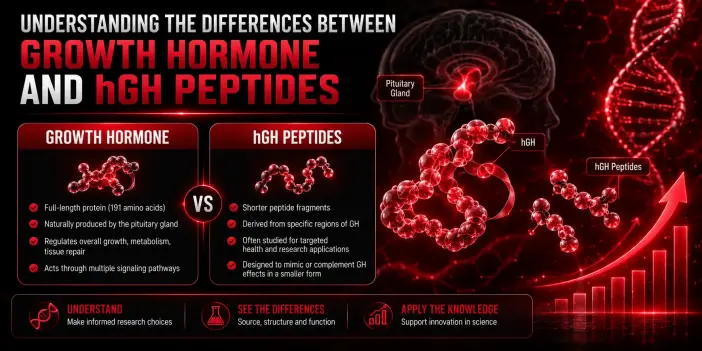
Growth hormone is a naturally occurring hormone produced by the human body. Human growth hormone (HGH) generally refers to the same hormone molecule, particularly when discussing laboratory-produced versions used in medical settings. Growth hormone peptides, on the other hand, are smaller signaling molecules that researcher's study for their ability to influence the body's natural growth hormone pathways.
Interest in these topics has increased because growth hormone signaling relates to important biological processes, including:
- Growth and development
- Protein metabolism
- Cellular communication
- Tissue maintenance
- Recovery-related pathways
- Hormonal regulation research
Researchers continue studying growth hormone pathways in areas such as endocrinology, biotechnology, regenerative medicine research, and aging biology.
However, understanding the differences between GH, HGH, and peptides is important because these compounds do not work in the same way. HGH provides the hormone itself, while certain peptides are studied for their potential ability to influence hormone signaling pathways.
What Is Growth Hormone (GH)?
Growth hormone (GH), also called somatotropin, is a peptide hormone naturally produced by the pituitary gland, a small gland located at the base of the brain. The primary function of growth hormone is to regulate growth-related biological processes, especially during childhood and adolescence. However, GH continues to play important roles throughout adulthood.
Growth hormone participates in:
- Cell growth and maintenance
- Protein metabolism
- Energy regulation
- Tissue repair processes
- Hormonal signaling pathways
How the Body Produces Growth Hormone
Growth hormone production is controlled by communication between the hypothalamus and pituitary gland. The hypothalamus releases signaling hormones that regulate GH production, including:
- Growth hormone-releasing hormone (GHRH)
- Somatostatin
GHRH encourages GH release, while somatostatin helps regulate and limit GH secretion. The pituitary gland then releases growth hormone into the bloodstream. Unlike many hormones that remain relatively stable, GH secretion occurs in pulses.
These natural pulses are influenced by factors such as:
- Sleep patterns
- Exercise
- Nutrition
- Stress responses
- Age-related changes
This pulsatile release pattern is an important feature of normal growth hormone biology.
Growth Hormone Function in the Body
During childhood and adolescence, growth hormones play a major role in physical development. One of its key actions is stimulating the production of insulin-like growth factor-1 (IGF-1), mainly through the liver. IGF-1 contributes to:
- Bone growth
- Muscle development
- Cellular growth processes
Protein Metabolism
Growth hormone influences the body by using amino acids and proteins. Research has shown that GH signaling is involved in:
- Protein synthesis pathways
- Tissue maintenance
- Cellular activity
These functions have contributed to scientific interest in GH within exercise physiology and regenerative biology.
Cell Signaling and Tissue Maintenance
Growth hormone interacts with specific receptors on cells, activating signaling pathways involved in biological regulation. These pathways influence processes related to:
- Cell communication
- Metabolism
- Growth-related activity
Researchers continue studying GH signaling because it provides insight into how hormones regulate complex biological systems.
The Relationship Between Growth Hormone and IGF-1
One of the most important relationships in growth hormone biology involves insulin-like growth factor-1 (IGF-1). The process can be summarized as:
- The hypothalamus signals the pituitary gland.
- The pituitary releases growth hormone.
- Growth hormone stimulates IGF-1 production.
- IGF-1 influences growth-related cellular pathways.
Because of this relationship, researchers often measure IGF-1 levels when studying growth hormone activity. GH and IGF-1 work together as part of a larger hormonal network rather than functioning independently.
What Is Human Growth Hormone (HGH)?
Human growth hormone (HGH) refers to the human form of growth hormone. Scientifically, HGH is the same hormone naturally produced by the human body. The term is commonly used when referring to growth hormone produced through biotechnology for medical applications.
The key distinction is:
- GH: The naturally occurring hormone produced by the body.
- HGH: Human growth hormone, often referring to laboratory-produced versions identical or like natural GH.
Laboratory Production of HGH
Modern HGH is produced through recombinant DNA technology.
This biotechnology process involves:
- Creating genetic instructions for human growth hormone.
- Introducing those instructions into specialized production systems.
- Producing hormone molecules.
- Purifying and preparing it for approved medical applications.
Recombinant HGH was developed to provide a consistent supply of human growth hormone for specific clinical situations.
Medical Applications of HGH
HGH has established medical uses in certain situations involving growth hormone deficiency and related conditions.
Clinical applications may include:
- Childhood growth hormone deficiency
- Certain hormone-related growth disorders
- Specific adult medical conditions involving GH deficiency
These uses are based on medical evaluation and professional supervision. HGH is considered the actual growth hormone molecule, meaning it directly provides the hormone rather than stimulating the body to release more of its own GH.
What Are Growth Hormone Peptides?
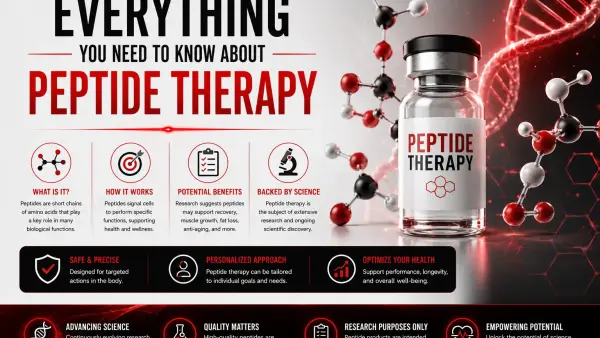
Peptides are short chains of amino acids that can act as signaling molecules in biological systems. Unlike HGH, which is the hormone itself, peptides may influence biological communication by interacting with existing pathways. Researchers study peptides because they can provide insight into how the body regulates hormone production and cellular activity.
What Is Growth Hormone-Related Peptides?
Growth hormone-related peptides are compounds investigated for their ability to influence growth hormone secretion pathways.
They generally fall into two major categories:
- Growth Hormone-Releasing Hormones (GHRH)
- Growth Hormone-Releasing Peptides (GHRPs)
These compounds are studied as part of broader peptide therapy research and hormone signaling investigations.
Growth Hormone-Releasing Hormones (GHRH Peptides)
GHRH peptides are designed to interact with pathways involved in stimulating growth hormone release.
Examples include:
Sermorelin
Sermorelin is a peptide related to growth hormone-releasing hormone research. Scientists study its ability to interact with natural GH signaling pathways.
CJC-1295
CJC-1295 is another peptide studied for its relationship with growth hormone regulation pathways. Research has examined how it may influence GH-related signaling.
Growth Hormone-Releasing Peptides (GHRP Peptides)
GHRP peptides represent another group of compounds studied in growth hormone research.
Examples include:
GHRP-2
GHRP-2 has been investigated for its ability to interact with pathways involved in GH secretion.
GHRP-6
GHRP-6 is another research peptide studied within the context of growth hormone signaling.
Ipamorelin
Ipamorelin is a peptide researched for its interaction with growth hormone-related pathways. Researchers study these compounds to better understand hormone regulation mechanisms.
Conclusion
Those searching for Dragon Pharma Buy options often come across information about growth hormones, HGH, and growth hormone peptides. The relationship between these compounds represents an important area of research within endocrinology, biotechnology, fitness science, and regenerative medicine. Although these terms are often used interchangeably, they describe different biological concepts. Growth hormone (GH) is the naturally produced hormone responsible for regulating important processes such as growth, metabolism, cellular signaling, and tissue maintenance. Human growth hormone (HGH) refers to the same hormone molecule, particularly when discussing laboratory-produced forms used in specific medical applications.
Growth hormone peptides, including GHRH peptides and GHRP peptides, represent a different category of compounds. Rather than being the hormone itself, these peptides are studied for their ability to interact with the body's natural hormone signaling pathways. Research into compounds such as sermorelin, CJC-1295, GHRP-2, GHRP-6, and ipamorelin has helped scientists better understand how growth hormone regulation works and how signaling pathways influence biological processes.
Current research suggests that growth hormone pathways are involved in a wide range of functions, including IGF-1 regulation, protein metabolism, cellular communication, and tissue-related processes. These findings continue to support scientific interest in GH biology and its role in areas such as exercise science, aging research, and regenerative medicine.
However, HGH and growth hormone peptides should not be viewed as identical compounds or interchangeable approaches. HGH directly represents the hormone molecule, while peptides are investigated for their potential influence on natural hormone regulation. The effects, applications, and research status of each compound depend on the specific molecule, biological context, and available scientific evidence.
As peptide research and hormone science continue to develop, Dragon Pharma Peptides remain part of the broader scientific interest in peptide-based research compounds. Ongoing studies will provide greater insight into how these biological pathways function and how they may contribute to future medical and biotechnology applications. For now, the most accurate understanding is that growth hormone and growth hormone-related peptides are valuable subjects of scientific investigation, with their roles continuing to be explored through clinical and laboratory research.