
8 min read
SS-31 Peptide: Exploring Its Role in Kidney and Heart Research
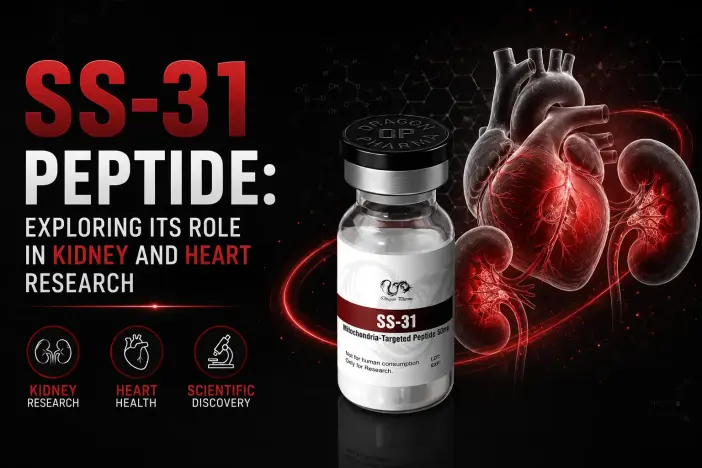
Interest in Buy SS-31 50mg reflects the growing focus on mitochondrial research and compounds being studied for their potential interactions with cellular energy pathways. Every cell in the human body depends on tiny structures called mitochondria to generate the energy required for survival. Often referred to as the "powerhouses of the cell," mitochondria convert nutrients into adenosine triphosphate (ATP), the molecule that fuels virtually every biological process from muscle contraction and brain function to kidney filtration and heartbeats.
As people age, mitochondrial efficiency naturally declines. In addition, many chronic diseases are associated with mitochondrial dysfunction, a state in which mitochondria produce less energy while generating higher levels of harmful byproducts known as reactive oxygen species (ROS). Researchers believe this combination of reduced energy production and increased oxidative stress may contribute to tissue damage and impaired cellular function across multiple organs.
Because mitochondria play such a central role in health, scientists have spent decades searching for therapies that can support mitochondrial function. One of the most widely studied investigational compounds is the SS-31 peptide, also known as Elamipretide, Bendavia, or MTP-131.
Unlike conventional medications that target receptors or enzymes, SS-31 was specifically designed to reach mitochondria and interact with a unique lipid called cardiolipin, which is essential for maintaining normal mitochondrial function. Researchers are investigating whether this mitochondria-targeting peptide can improve ATP production, reduce oxidative stress, and protect cells from mitochondrial injury.
While laboratory and animal studies have produced encouraging findings, and clinical trials have explored its potential in several diseases, SS-31 remains an investigational therapy for many proposed uses. Understanding where science currently stands is essential for separating promising research from established medical evidence.
What Is SS-31?
The SS-31 peptide is a synthetic tetrapeptide developed to selectively target mitochondria. Its small size allows it to cross cell membranes and accumulate inside mitochondria without relying on the cell's membrane potential. The peptide was originally developed to address mitochondrial dysfunction, a feature observed in numerous age-related diseases and conditions involving high metabolic demand.
Unlike many antioxidants that circulate throughout the body, SS-31 is designed to localize within mitochondria, where oxidative stress is generated. This targeted approach has made it one of the most extensively studied mitochondrial peptides in biomedical research. Scientists are particularly interested in mitochondria-targeted therapies because mitochondrial dysfunction appears to contribute to conditions affecting the:
- Heart
- Kidneys
- Brain
- Skeletal muscles
- Eyes
- Metabolic system
Although peptide has undergone multiple clinical studies, regulatory approval remains limited, and research continues to determine where it may provide meaningful clinical benefit.
How SS-31 Works
The proposed mechanism of SS-31 is different from many traditional medications because it acts directly inside mitochondria.
Binding to Cardiolipin
One of the defining characteristics of SS-31 is its ability to bind to cardiolipin , a specialized phospholipid found almost exclusively in the inner mitochondrial membrane.
Cardiolipin helps organize proteins involved in energy production. Damage or oxidation of cardiolipin can impair mitochondrial performance and increase oxidative stress. Laboratory studies suggest SS-31 associates with cardiolipin and may help preserve its normal function.
Stabilization of the Inner Mitochondrial Membrane
The inner mitochondrial membrane houses the electron transport chain, the system responsible for generating ATP. Researchers propose that SS-31 helps stabilize this membrane, supporting its structural integrity during periods of cellular stress. Maintaining membrane stability may improve mitochondrial efficiency and reduce damage caused by excessive oxidative stress.
Improved ATP Production
ATP is the primary energy currency of every cell. Experimental studies indicate that SS-31 may enhance mitochondrial efficiency, allowing cells to produce ATP more effectively under stressful conditions. Improved ATP production has been investigated in tissues with especially high energy demands, including:
- Heart muscle
- Kidney tissue
- Skeletal muscle
- Brain cells
Reduction of Reactive Oxygen Species (ROS)
Normal mitochondrial metabolism naturally produces reactive oxygen species. In healthy cells, ROS are carefully regulated. However, mitochondrial dysfunction can lead to excessive ROS production, damaging proteins, lipids, and DNA. SS-31 is thought to reduce excessive ROS generation by improving electron transport efficiency rather than acting as a traditional antioxidant.
Protection Against Oxidative Stress
By limiting ROS production and preserving mitochondrial structure, SS-31 may reduce oxidative stress inside cells. Researchers believe this mechanism could potentially lessen cellular injury in diseases characterized by mitochondrial dysfunction, although this remains an active area of investigation.
Potential Effects on Electron Transport
The mitochondrial electron transport chain generates ATP through a series of protein complexes. Preclinical research suggests SS-31 may improve communication between these complexes, reducing electron leakage and increasing energy production efficiency. This proposed mechanism continues to be studied in both laboratories and clinical settings.
Potential Benefits Being Studied
Kidney Health
The kidneys require substantial energy to filter blood and regulate fluid balance, making them highly dependent on healthy mitochondria.
Acute Kidney Injury
Acute kidney injury (AKI) can develop rapidly following reduced blood flow, surgery, infection, or certain medications.
Animal studies suggest SS-31 may reduce mitochondrial injury following ischemia-reperfusion events, potentially preserving kidney cell function. However, these findings have not established SS-31 as a standard treatment for AKI.
Chronic Kidney Disease
Researchers are also examining whether improving mitochondrial health could help slow cellular damage associated with chronic kidney disease (CKD).
Experimental models have shown improvements in mitochondrial function and markers of oxidative stress, but larger human studies are necessary.
Mitochondrial Protection
Kidney cells contain thousands of mitochondria due to their high energy requirements. By supporting cardiolipin integrity and ATP production, SS-31 may help maintain normal mitochondrial activity during cellular stress.
Experimental Findings
Preclinical research has reported:
- Reduced mitochondrial swelling
- Lower oxidative damage
- Improved cellular energy production
- Better preservation of kidney tissue in animal models
These observations remain investigational.
Heart Health
Heart muscle continuously requires enormous amounts of ATP, making mitochondria essential for normal cardiac function.
Oxidative Stress
Many cardiovascular diseases involve elevated oxidative stress and impair mitochondrial performance. Researchers have explored whether SS-31 can reduce oxidative injury within cardiac cells.
Cardiac Muscle Function
Animal studies suggest improved mitochondrial efficiency may support better cardiac muscle performance under certain experimental conditions.
Heart Failure Research
Clinical research has investigated Elamipretide in people with heart failure and mitochondrial cardiomyopathies. Some studies reported improvements in biomarkers or mitochondrial function, while others found limited or mixed clinical benefits. The evidence remains inconclusive.
Cardiomyopathy Studies
Inherited mitochondrial cardiomyopathies are another area of active research. Scientists continue evaluating whether mitochondrial-targeted therapies can improve energy metabolism in affected heart muscle.
Brain and Nervous System
The brain consumes approximately 20% of the body's energy despite representing only a small fraction of total body weight. Because neurons rely heavily on mitochondria, researchers have explored SS-31 for several neurological conditions.
Neuroprotection
Laboratory research suggests mitochondrial stabilization may reduce neuronal injury during oxidative stress.
Cognitive Function
Improved mitochondrial performance has raised interest in possible effects on cognitive aging, although clinical data are still preliminary.
Eye Health
The retina has one of the highest metabolic demands in the body.
Retina
Healthy retinal cells require efficient mitochondrial energy production. Researchers have investigated whether SS-31 can preserve retinal cell function during oxidative stress.
Glaucoma
Experimental studies suggest mitochondrial dysfunction contributes to retinal ganglion cell injury. SS-31 is being studied for its potential neuroprotective properties in this setting.
Age-Related Macular Degeneration
Oxidative stress is believed to contribute to age-related macular degeneration (AMD). Animal research has explored whether mitochondrial stabilization may reduce retinal damage.
Oxidative Stress
Elevated glucose levels may increase mitochondrial ROS production. Researchers are studying whether improving mitochondrial efficiency can reduce oxidative damage.
Inflammation
Experimental work suggests healthier mitochondrial function may influence inflammatory signaling, although this relationship remains under investigation.
Mitochondrial Dysfunction
Mitochondrial impairment has been linked with insulin resistance and reduced metabolic flexibility.
Muscle Function and Healthy Aging
Declining mitochondrial performance is one of the hallmarks of biological aging.
ATP Production
Maintaining ATP production may help support normal muscle function during aging.
Fatigue Resistance
Animal studies have reported improved endurance and reduced fatigue under experimental conditions.
Muscle Performance
Researchers are evaluating whether mitochondrial-targeted therapies can preserve muscle quality in older adults.
Healthy Aging Research
Because mitochondrial dysfunction contributes to many age-related changes, SS-31 has attracted attention in longevity research.
Conclusion
Information related to Dragon Pharma reflects the growing interest in peptide-based scientific studies and mitochondrial research. Compounds such as SS-31 50mg continue to be investigated within the field of cellular biology, with available evidence supporting continued scientific exploration while emphasizing the importance of careful interpretation of research findings and realistic expectations.
The SS-31 peptide, also known as Elamipretide, represents one of the most advanced investigational mitochondrial peptides currently under scientific study. By targeting cardiolipin within the inner mitochondrial membrane, researchers believe it may help stabilize mitochondria, improve ATP production, and reduce oxidative stress.
Preclinical research has demonstrated encouraging findings across multiple areas, including kidney health, heart health, neuroprotection, eye disorders, metabolic disease, and healthy aging. However, clinical research has produced mixed results, and many important questions remain regarding long-term effectiveness, ideal patient populations, and overall clinical impact.
The future of mitochondrial medicine is an exciting field of ongoing research. As scientists continue to better understand mitochondrial dysfunction and develop targeted therapies, compounds like SS-31 may help expand our understanding of how cellular energy influences health and disease.
Information related to SS-31 50mg For Sale reflects the growing interest in mitochondrial research and peptide-based scientific studies. For now, the available evidence supports continued scientific investigation while emphasizing the importance of careful interpretation of research findings and realistic expectations.